Canada Life Breach: 70,000 Confirmed via One Salesforce Login, 5.5M Claimed
Canada Life confirmed a hacker used one employee login to reach its Salesforce and access 70,000 people's data. Three months on, ShinyHunters claims 5.5 million records are for sale. The gap between those numbers — and one stolen login — is the story.

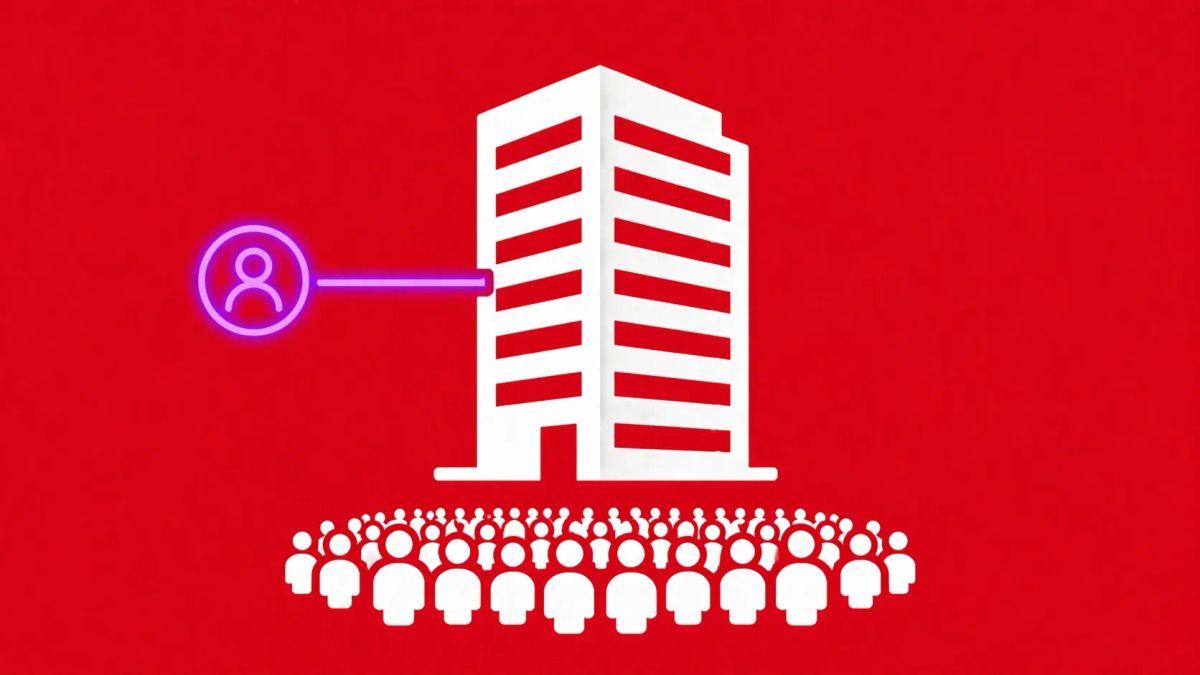
When Canada Life told roughly 70,000 people in April that a hacker had reached their personal data, the company was careful to bound the damage: one compromised employee account, one cloud system, fewer than half a percent of its customers. Three months later that framing is under pressure. In June, the extortion group behind the intrusion — ShinyHunters — listed what it claims are 5.5 million Canada Life records for sale, a number the insurer has never confirmed. The gap between those two figures is the whole story: what is established, what an attacker asserts, and why one stolen login was enough to put either number in play.
What Canada Life Confirmed — and What It Didn't
Canada Life identified the incident in mid-April 2026 and disclosed it publicly on April 23. Its account is narrow and specific: an unauthorized party used a single Canada Life employee's account to reach the company's Salesforce environment and accessed the personal information of up to 70,000 individuals — less than 0.5% of its customer base, most of them members of one large corporate group plan.
The data that moved is sensitive but bounded. Per the disclosure and reporting from The Globe and Mail and Canadian HR Reporter, the accessed fields were names, dates of birth, mailing addresses, gender, and annual income level. Canada Life was explicit that Social Insurance Numbers, banking details, and medical information were not part of the accessed data — a real limit for anyone weighing their own exposure. Affected customers were offered credit monitoring.
What the company has pointedly not confirmed is ShinyHunters' number. The group claimed roughly 5.5 million records and, according to Cybernews researchers, posted a fresh for-sale listing on June 21. Treat that as an attacker's claim, not a finding: extortion crews routinely inflate volumes to pressure a victim, and a sale listing is not proof of a clean 5.5-million-record set.
● THE BLAST RADIUS OF ONE LOGIN One compromised employee login opened Canada Life’s Salesforce CRM — no software flaw required. |
ONE EMPLOYEE ACCOUNT A single valid Canada Life login, used to sign in to the corporate Salesforce environment. |
| ↓ |
SALESFORCE CRM Customer-relationship and claims data for a large corporate group plan — no Salesforce flaw exploited. |
| ↓ |
CONFIRMED — ~70,000 PEOPLE Names, dates of birth, addresses, gender, income level. No SINs, banking, or medical data. |
CLAIMED — 5.5 MILLION RECORDS ShinyHunters’ unverified figure, later listed for sale. Canada Life has not confirmed it. |
Source: Canada Life disclosure; The Globe and Mail; Insurance Business. Confirmed vs. attacker-claimed figures. |
One Login, One Campaign
The detail that turns this from a Canada Life story into an industry one is the vector. There was no exploit of Salesforce. As one analysis put it, the platform “behaves as designed when presented with valid credentials” — the attacker simply had a working employee login and used it. How that login was obtained has not been disclosed, and it is worth resisting the urge to fill the gap: the original version of this story guessed at credential-stuffing and weak MFA, but Canada Life never confirmed a mechanism. A named-but-wrong root cause is worse than an acknowledged unknown.
What is established is the company this incident keeps. ShinyHunters — financially motivated and active since 2020 — spent 2025 and 2026 running a campaign against cloud CRM platforms, Salesforce above all, hitting a string of large brands the same way. The CyberSignal has tracked the pattern through the group's pay-or-leak ultimatum to Zara, Carnival, and 7-Eleven and McGraw Hill's Salesforce-linked data exposure; Canada Life sits squarely inside it. On April 17 the group publicly claimed access to eight companies including Canada Life, with a ransom deadline of April 21 — two days before the insurer went public.
My Read
The number to hold onto is not 70,000 or 5.5 million — it is one. One valid login reached a CRM holding customer records at scale, and nothing about Salesforce had to break for it to work. That is the uncomfortable core of the identity-first attacks defining this period: when the perimeter is a credential, the blast radius of a single account is the entire dataset it can query. Canada Life's “less than 0.5%” is true, and also beside the point for the next victim, whose one compromised login might sit in front of a far larger table.
The 5.5-million claim is the opposite lesson. The distance between a confirmed 70,000 and a claimed 5.5 million is exactly where extortion pressure lives, and an organization that cannot quickly bound what was actually queried cedes that ground to the attacker. Forensic readiness — knowing which records a given session touched — is what lets a company say “70,000, and here is how we know” instead of negotiating against a number it cannot disprove.
What Defenders Should Do
If you run Salesforce or a comparable CRM, the Canada Life pattern is a checklist, not a headline:
- Make the login phishing-resistant. A valid credential was the whole attack. Enforce phishing-resistant MFA (FIDO2/passkeys or hardware keys) on every CRM identity, and treat SMS and push-approval codes as insufficient for accounts that can read customer data in bulk.
- Govern connected apps and OAuth. The 2025–26 Salesforce campaign repeatedly abused authorized apps and data-export tooling. Inventory connected apps, restrict who can authorize new ones, and alert on fresh OAuth grants and Data Loader / bulk-API usage.
- Cap the blast radius per session. Apply least privilege and just-in-time access so no single account can export an entire object; add export row limits, IP or session binding, and step-up auth on large pulls.
- Instrument for bulk reads, not just logins. The damaging event here was reading ~70,000 records, not the sign-in. Monitor and rate-limit large queries and exports, and make anomalous bulk access page a human.
- Keep forensic receipts. Retain query and export logs long enough to reconstruct exactly what a compromised session touched — that is what lets you confirm a real number against an inflated one. Our account-takeover prevention and detection guide covers the session-monitoring side.
Open Questions
Two threads stay unresolved. First, how the employee account was compromised — phishing, a reused password, session-token theft, or social engineering — is not in the public record, and no one should assert one. Second, whether ShinyHunters actually holds 5.5 million usable records or is inflating a smaller set to move the sale is unproven; the confirmed figure remains 70,000. Whether Canadian privacy regulators (the federal OPC or provincial commissioners) open an inquiry, and whether the listed data is ever validated, will decide which number this story settles on.