Scattered Spider: How This Social Engineering Threat Group Breaches Modern Organizations


Introduction to Scattered Spider
Scattered Spider is a highly active hacking group, also known as 0ktapus, UNC3944, or Muddled Libra, that has rapidly evolved into one of the most dangerous threat actors targeting enterprises today. The group focuses its attack efforts on the target organization by conducting reconnaissance, impersonating employees, and compromising digital assets to infiltrate networks. Originally emerging around 2022, Scattered Spider has evolved from a SIM-swapping crew into a sophisticated cybercriminal group that employs advanced social engineering techniques for large-scale data theft and ransomware attacks.
Unlike traditional attackers that rely heavily on malware, Scattered Spider specializes in social engineering tactics that exploit human vulnerability. Their operations focus on gaining access to the target organization by manipulating employees, particularly through phone calls, fake social media profiles, and help desk impersonation. This human-first approach makes them especially effective against even well-defended environments.
The group primarily targets Fortune 500 companies in industries like technology, gaming, hospitality, and retail, with a strong focus on organizations that rely heavily on cloud services and remote access infrastructure.
Scattered Spider also primarily targets managed service providers (MSPs) and IT contractors to exploit their access to multiple client networks through a single point of compromise.
Scattered Spider is a loose, decentralized group capable of quickly pivoting to new attack vectors if one is closed.
Scattered Spider Initial Access: How They Gain Entry
Scattered Spider excels at gaining initial access by combining technical tools with highly sophisticated social engineering. Instead of exploiting vulnerabilities in operating systems or security software, they focus on exploiting trust within organizations.

Their initial access techniques often involve impersonating IT staff and contacting employees or service desks to reset passwords or bypass multi factor authentication. Scattered Spider frequently leverages compromised credentials to gain unauthorized access, maintain persistence, and facilitate lateral movement within the target organization. They use voice-based phishing, also known as vishing, along with SMS phishing and phishing frameworks like Evilginx to capture credentials and session tokens. Additionally, Scattered Spider employs "MFA fatigue" attacks by flooding users with push notifications until they accept one.
Common Initial Access Methods
- Social engineering attacks through phone calls to help desks
- SIM swapping to take control of employee phone numbers
- MFA fatigue attacks that push users to approve login requests
- Fake login pages using proxy tools and typosquatted domains
- Targeting credential storage documentation and employee credentials
- Creating or exploiting new user identities within the victim's environment to maintain persistent access and facilitate lateral movement
These techniques allow Scattered Spider to gain internal access without triggering traditional endpoint detection systems. Their ability to bypass multi factor authentication and gain access to user identities is one of the key reasons they are so effective.
Social Engineering: The Core of Scattered Spider Attacks
Social engineering is at the center of nearly every Scattered Spider campaign. The group has been observed impersonating IT staff and building trust with employees to manipulate them into granting access to critical systems. Successful social engineering often results in a compromised host, which attackers can then use to deploy remote access tools, execute malware, create persistence, or move laterally within the network.
They often gather personal information from social media to make their attacks more convincing, then use that information in phone calls or messages to appear legitimate. Scattered Spider also impersonates IT helpdesk personnel to convince employees to reset passwords and bypass multi-factor authentication (MFA). Additionally, they employ phishing campaigns using typosquatted domains to deceive victims into providing credentials. This level of sophistication makes their social engineering attacks extremely difficult to detect.
Key Social Engineering Tactics
- Impersonating help desk personnel to reset passwords
- Using fake social media profiles to gather intelligence
- Conducting desk voice based phishing campaigns
- Sending phishing links that mimic legitimate login portals
- Exploiting human trust rather than technical vulnerabilities
Scattered Spider has also been observed targeting service desks directly, exploiting weak identity verification processes to gain access to privileged accounts. This approach highlights how security gaps in human processes can be just as dangerous as technical flaws.
Sim Swapping and Identity Theft: A Key Attack Vector
Sim swapping and identity theft are central to Scattered Spider’s ability to gain initial access to target organizations. By leveraging social engineering tactics, the group manipulates help desk staff into resetting passwords and multi factor authentication tokens, often by impersonating legitimate employees. This allows them to bypass multi factor authentication and gain access to sensitive data and internal systems.
Sim swapping, in particular, enables attackers to take control of an employee’s phone number, intercepting authentication codes and further facilitating unauthorized access. Once inside, Scattered Spider can establish persistence, create fake social media profiles for further reconnaissance, and move laterally within the compromised network. These techniques exploit human vulnerability, making it critical for organizations to strengthen identity verification processes and monitor network traffic for signs of suspicious activity.
Lateral Movement: Expanding Across the Compromised Network
Once Scattered Spider gains access to a compromised system, they move quickly to establish persistence and expand their reach across the compromised network. Using compromised hosts, they enable lateral movement and elevate privileges within the target organization's network to gain access to sensitive data, critical systems, and privileged users. Their attacks typically unfold in multiple stages, including initial access, lateral movement, persistence, and data exfiltration. The group also exploits managed service providers (MSPs) and IT contractors to breach multiple client networks through a single point of compromise.
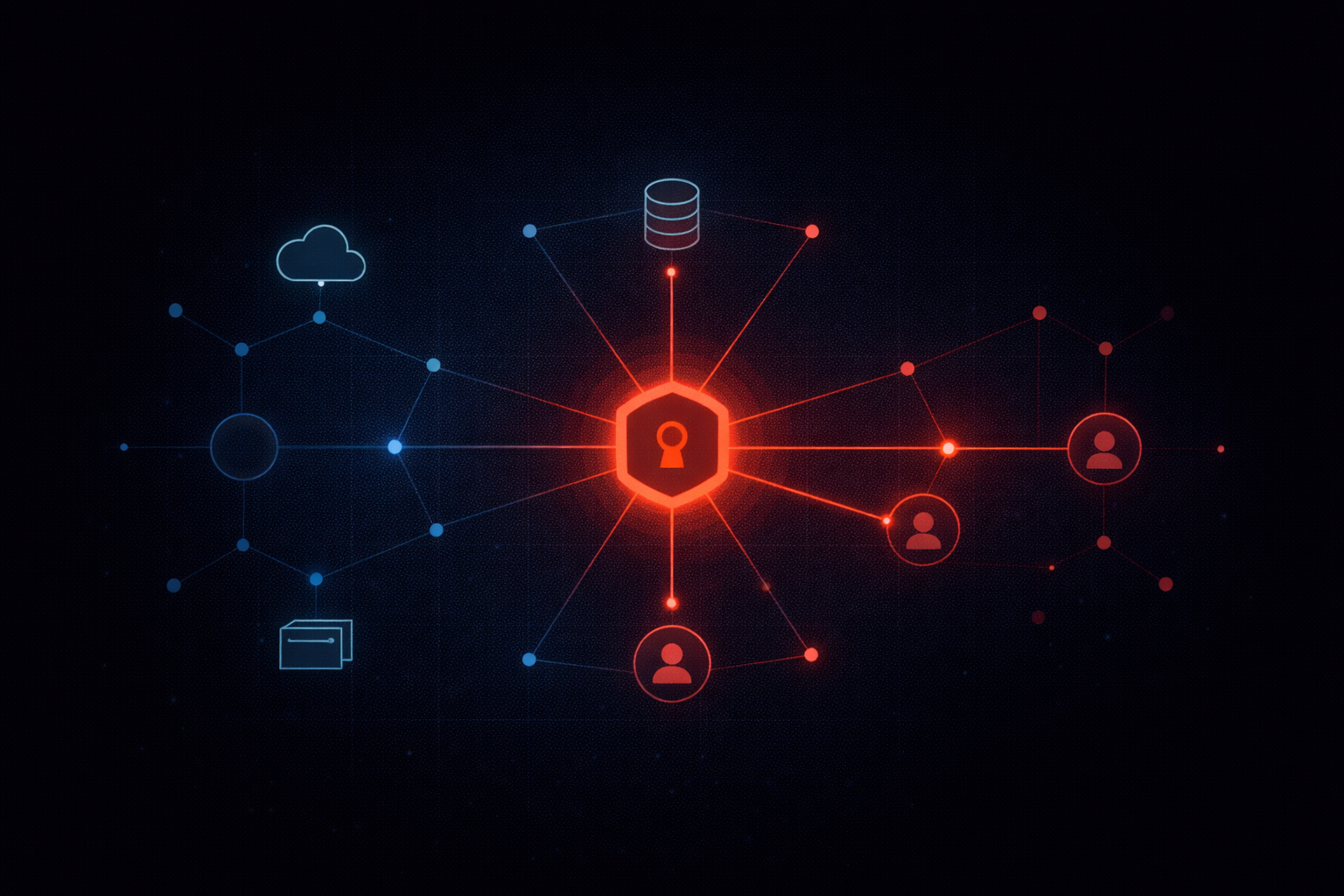
They use legitimate tools and remote access software to blend in with normal network traffic, making detection more difficult. This living-off-the-land approach allows them to avoid triggering security alerts while enabling lateral movement across cloud environments and on premises systems. Their use of federated identity providers further allows them to expand access across multiple systems and environments, leveraging federated credentials to maintain persistence and bypass access controls.
How Scattered Spider Enables Lateral Movement
Technique | Description | Impact |
|---|---|---|
Credential harvesting | Extracting employee credentials and browser histories | Enables access to additional systems |
Remote access tools | Using commercial remote access tools and remote monitoring software | Maintains stealthy access |
Privilege escalation | Elevating privileges to access service accounts and privileged users | Expands control over network |
Proxy networks | Routing traffic through proxy tools to evade detection | Obfuscates attacker activity |
By leveraging centralized databases, single sign on systems, and federated identity providers, Scattered Spider can rapidly expand access across multiple systems and environments.
Use of Legitimate Tools and Cloud Security Weaknesses
Scattered Spider is known for using legitimate tools instead of traditional malware, which makes their activity harder to detect. They rely heavily on remote monitoring and management platforms, cloud services, and widely used enterprise tools to maintain persistence. Scattered Spider may also search for and exfiltrate code signing certificates, which can be used to further their attacks or help evade detection.
This approach allows them to operate within cloud environments and remote systems without raising immediate suspicion. By blending in with normal user behavior, they can maintain persistence and continue data theft operations over extended periods. Scattered Spider has also been known to use living-off-the-land (LOTL) techniques to evade detection after gaining access to networks.
Tools and Techniques Used
- Remote monitoring and management tools
- Commercial remote access software
- Proxy tools and proxy networks
- Cloud-based identity systems and single sign on
Their ability to exploit cloud security gaps and identity systems makes them particularly dangerous in modern enterprise environments.
Cloud-Based Security Solutions: Closing the Gaps
As Scattered Spider increasingly targets cloud environments and exploits weaknesses in remote access software, cloud-based security solutions have become essential for modern organizations. These solutions help close infrastructure security gaps by providing comprehensive visibility and control over remote access, cloud services, and user activity.
Cloud security platforms enable organizations to detect and prevent lateral movement by monitoring for anomalous behavior and unauthorized access attempts. Real-time alerts and automated incident response capabilities allow security teams to respond swiftly to potential breaches, minimizing the impact on sensitive data and business operations. Additionally, cloud-based solutions support compliance efforts and ensure that data stored in cloud services remains protected against sophisticated social engineering tactics.
Data Theft and Ransomware Operations
Scattered Spider has increasingly shifted toward ransomware and data theft operations, often using Ransomware-as-a-Service platforms. They have formed alliances with groups like DragonForce, allowing them to scale attacks without developing their own ransomware. Stolen data is often leveraged for double extortion, blackmail, or sale on dark web forums, making it a key asset for threat groups like Scattered Spider.

Their attacks often involve stealing sensitive files, network diagrams, and internal data before deploying ransomware. This double extortion model increases pressure on organizations to pay. Scattered Spider has been linked to significant data breaches at major companies, including Caesars Entertainment and MGM Resorts International.
Key Data Theft Objectives
- Sensitive data and customer information
- Credential databases and access tokens
- Network diagrams and infrastructure details
- Centralized database contents
Deep involvement in data theft operations has linked Scattered Spider to multiple high-profile breaches, including attacks on major organizations.
High-Profile Attacks: MGM Resorts and Beyond
Scattered Spider gained widespread attention after launching attacks against MGM Resorts and Caesars Entertainment in September 2023. These attacks caused significant service disruptions and financial damage, demonstrating the real-world impact of their tactics.
The group has also been linked to attacks against companies like Clorox and Victoria’s Secret, as well as a coordinated campaign targeting UK retailers such as Marks & Spencer, Co-op, and Harrods in 2025.
Notable Incidents
- MGM Resorts and Caesars Entertainment ransomware attacks
- Retail sector attacks affecting multiple organizations
- Targeting managed service providers to access multiple client networks
These incidents show how Scattered Spider targets organizations in the same sector, leveraging shared vulnerabilities and access points.
Threat Intelligence and Analysis: Staying Ahead of Scattered Spider
Staying ahead of Scattered Spider’s rapidly evolving tactics requires robust threat intelligence and ongoing analysis. By closely monitoring scattered spider activity and analyzing their attack vectors, organizations can proactively identify vulnerabilities and adapt their defenses accordingly.
Threat intelligence provides valuable insights into the group’s preferred targets, methods of gaining access, and the types of sensitive data they seek. This information enables organizations to anticipate potential attacks and implement targeted security controls, such as advanced endpoint detection and response systems. Regular analysis of threat actor behavior also helps organizations refine their incident response strategies and stay prepared for new techniques as they emerge.
Incident Response: How to Defend Against Scattered Spider
Defending against Scattered Spider requires a strong focus on identity security, employee training, and incident response readiness. Recent warnings from the Cybersecurity and Infrastructure Security Agency (CISA) and other national agencies have highlighted the significant risks posed by groups like Scattered Spider to critical infrastructure and commercial sectors. Because their attacks rely heavily on social engineering, technical controls alone are not enough.
Organizations must implement layered defenses that address both human and technical risks. This includes improving help desk verification processes and monitoring suspicious account activity. Additionally, organizations should maintain offline backups of data that are stored separately from source systems and tested regularly.
Recommended Security Measures
- Enforce phishing-resistant multi-factor authentication (MFA) across all critical systems
- Implement strong identity verification for password resets and account unlock requests
- Conduct regular social engineering awareness training for employees
- Monitor network traffic, domain registrations, and suspicious account activity for early detection
- Segment networks to limit lateral movement and reduce access to sensitive systems
- Apply application controls to manage and restrict unauthorized software execution
- Limit access to sensitive files and critical data based on least privilege principles
- Implement risk-based authentication to dynamically adjust access based on user behavior
- Maintain secure, offline backups of critical systems to support recovery from attacks
Regularly testing help desk procedures and incident response plans is critical to preventing unauthorized access through social engineering.
Security Awareness and Training: Empowering Your Workforce
Empowering employees through security awareness and training is one of the most effective ways to defend against Scattered Spider’s social engineering attacks. Since initial access often hinges on manipulating individuals, a well-informed workforce can serve as a critical line of defense.
Security awareness programs should educate staff about the dangers of sim swapping, identity theft, and social engineering, using real-world scenarios that mirror Scattered Spider’s tactics — such as deceptive phone calls, phishing emails, and fake social media profiles. Training should also reinforce best practices for password management, the use of multi factor authentication, and proper incident response procedures.
Why Scattered Spider Is So Effective
Scattered Spider stands out because of its ability to combine social engineering with technical expertise. They are a decentralized group that can quickly adapt to new defenses and pivot strategies when needed.
Their focus on human vulnerability rather than purely technical exploits allows them to bypass many traditional security controls. By targeting user identities and privileged access, they can gain deep access into target networks with minimal resistance.
This adaptability, combined with their use of legitimate tools and cloud-focused attacks, makes them one of the most dangerous threat actors operating today.
FAQ: Scattered Spider Explained
What is Scattered Spider?
Scattered Spider is a cybercriminal group known for using social engineering and identity-based attacks to gain access to corporate networks.
How does Scattered Spider gain initial access?
They use phishing, SIM swapping, and help desk impersonation to bypass authentication and gain access to employee accounts.
Why is Scattered Spider hard to detect?
They use legitimate tools and normal user behavior, making their activity blend in with regular network traffic.
What industries do they target?
They primarily target technology, finance, retail, and hospitality sectors.
How can organizations protect against Scattered Spider?
Organizations should enforce strong MFA, train employees, monitor suspicious activity, and improve identity verification processes.