Ransomware Group Targets Monmouth University in March Breach

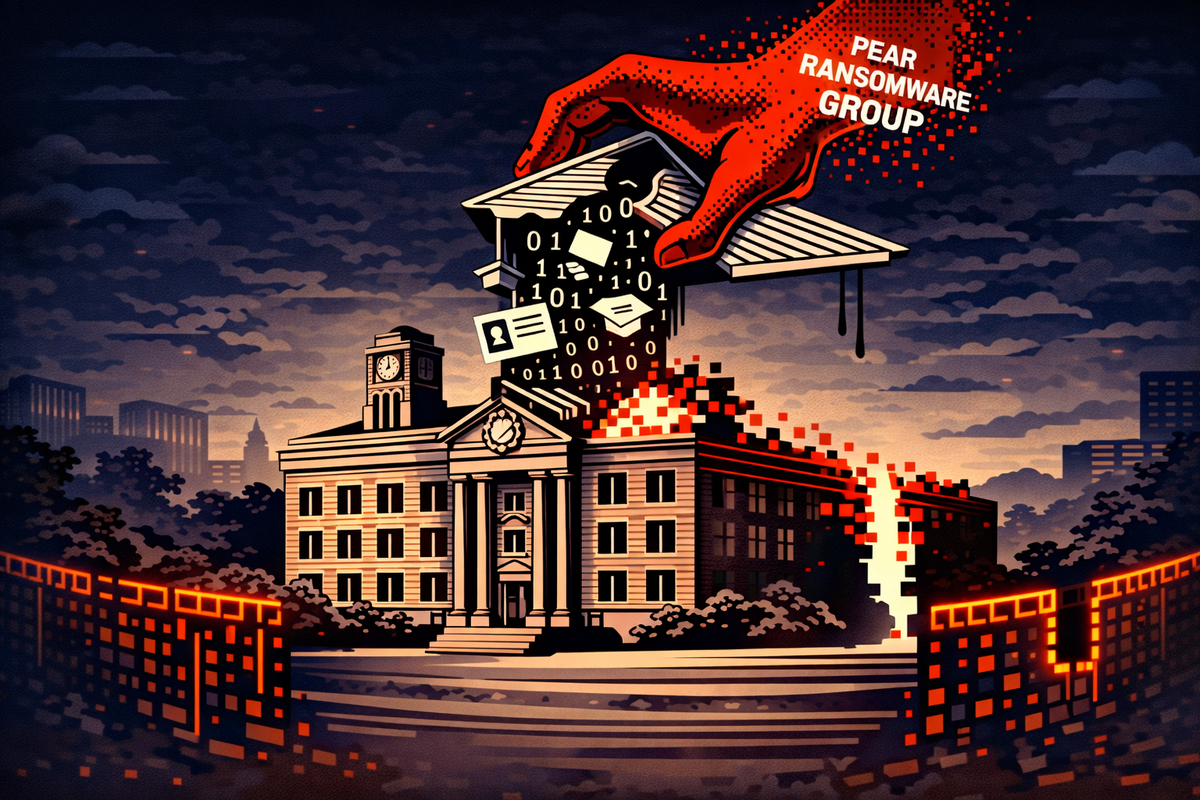
Monmouth University officials confirmed this week that a ransomware attack has disrupted campus digital infrastructure in New Jersey. The cybercriminal collective known as Pear stated they were responsible for the breach, asserting that they exfiltrated sensitive data before encrypting local systems.
Detection and Containment
The university detected unauthorized activity on its network during the first week of March 2026. In response, IT teams initiated emergency protocols — a standard procedure to isolate affected segments — which led to temporary outages of several internal portals and administrative services.
A university spokesperson stated that the institution is currently working with external forensic experts and federal law enforcement to determine the full scope of the compromise. While academic schedules have largely remained intact, several digital resources were transitioned to manual processes to ensure operational continuity.
The Pear Threat Group
The Pear ransomware group officially listed the university on its dark web leak site, identifying itself as the party behind the intrusion. The group alleged they possess personal identifiable information (PII) belonging to both students and faculty members, though the university has not yet verified the specific contents of the stolen files.
This incident mirrors a rising pattern of attacks targeting higher education institutions throughout the 24–48 hour window following initial access. Security researchers noted that the Pear group often utilizes compromised credentials to gain a initial foothold before moving laterally through the campus network.
Broader Sector Impact
The breach at Monmouth follows a string of similar incidents affecting educational institutions and local governments in early 2026. This follows a pattern seen in recent attacks on regional colleges and K–12 districts, where attackers exploit the vast, decentralized nature of academic networks.
The shift toward targeting mid-sized universities highlights a persistent vulnerability in academic environments. In these settings, open-network policies designed for research often conflict with the strict security controls required to thwart modern ransomware variants.
Additional Information: The Record, EdScoop, Comparitech, HookPhish
The CyberSignal Analysis
The attack on Monmouth University underscores the high-stakes environment for academic IT leaders who must balance accessibility with data protection.
- Operational Resilience: The university’s ability to maintain classes despite the digital disruption indicates a functional business continuity plan. However, the reliance on manual processes during a 5–10 day recovery window highlights the ongoing need for immutable off-site backups to reduce downtime.
- Strategic Risk: The involvement of the Pear group suggests that educational PII remains a high-value target for "double extortion" schemes. Universities are frequently viewed as accessible targets with high-value research and personal data that threat actors can leverage for significant ransom demands.
- Actionable Takeaways: Organizations should immediately audit their Service Provider and SSO (Single Sign-On) logs for irregular geo-location logins. Implementing strictly enforced Multi-Factor Authentication (MFA) on all academic portals remains the most effective barrier against the initial access vectors favored by the Pear group.