KindaRails2Shell — Critical Rails File Read and Possible RCE (CVE-2026-66066)
From a single image upload to arbitrary file read, and possibly remote code execution — Ruby on Rails has patched the critical Active Storage flaw its finders call KindaRails2Shell, and defenders running Rails should verify their version this week.

Key Takeaways
|
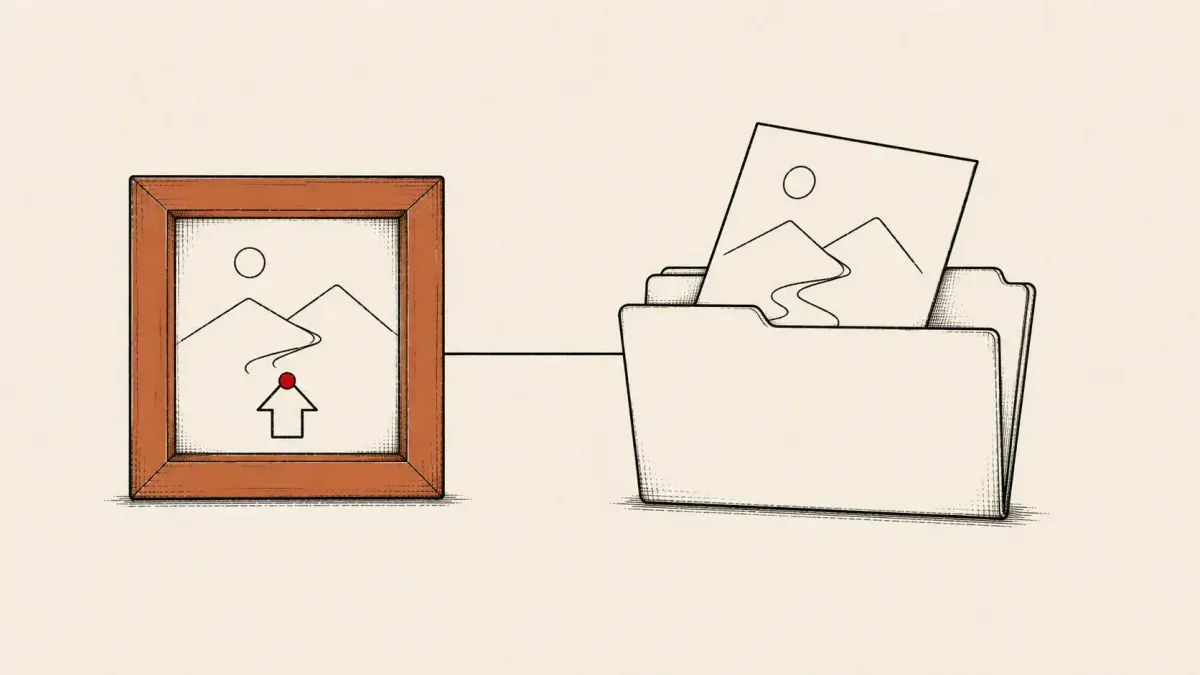
A crafted image upload reaches server secrets — Rails patched KindaRails2Shell this week, and the fix is a version bump, not a config toggle.
LISBON — Ruby on Rails has patched a critical vulnerability, nicknamed KindaRails2Shell and tracked as CVE-2026-66066, that could let an unauthenticated attacker read arbitrary files from a server — and, in the worst case, escalate to remote code execution — starting from something as ordinary as an image upload. The framework's maintainers disclosed the flaw and shipped fixed releases on July 29, 2026.
The bug lives in Active Storage, the file-handling system built into Rails, and specifically in how it turns an uploaded image into a resized variant. It was independently reported by researchers at Ethiack, who gave it the KindaRails2Shell name, and — days later — by RyotaK of GMO Flatt Security; GitHub, as CVE Numbering Authority, scored it 9.5 out of 10 on the CVSS v4 scale. This piece lays out what the advisory confirms, what defenders should verify, and where the impact ladder stops being certain — without reproducing how the flaw is triggered.
| At a Glance | |
|---|---|
| Field | Details |
| What | Critical arbitrary file read, possible RCE in Rails Active Storage ("KindaRails2Shell") |
| CVE | CVE-2026-66066 |
| Disclosed | July 29, 2026, by the Ruby on Rails security team |
| Reported by | Ethiack (André Baptista, Bruno Mendes, Rafael Castilho); also RyotaK, GMO Flatt Security |
| CVSS | 9.5 (CVSS v4), scored by GitHub as CNA |
| Vector | Crafted image upload processed by Active Storage variant generation (libvips) |
| Affected | Active Storage < 7.2.3.2, 8.0–8.0.5.0, 8.1–8.1.3.0 (default Vips processor) |
| Fixed in | Rails 7.2.3.2, 8.0.5.1, 8.1.3.1 |
| Exploitation | None reported observed; Rails team not aware — open question |
| Related coverage | CyberSignal vulnerability, web-framework, and RCE coverage |
What Rails Disclosed
On July 29, 2026, the Ruby on Rails security team published a coordinated advisory for CVE-2026-66066, a critical vulnerability in Active Storage — the framework's built-in file-attachment system — that could let an unauthenticated attacker read arbitrary files from a Rails server. The flaw was independently reported by researchers at Ethiack, who nicknamed it KindaRails2Shell, and, days later, by RyotaK of GMO Flatt Security. GitHub, acting as CVE Numbering Authority, scored it 9.5 on the CVSS v4 scale — near the top of the critical range.
The advisory's own title preserves the qualifier this piece keeps throughout: "possible arbitrary file read and remote code execution." Arbitrary file read is the confirmed impact; remote code execution is described as a possible escalation, not a demonstrated certainty. That distinction matters for triage, and The CyberSignal reports the mechanics only at the level a defender needs to size the risk — not as a walkthrough.
The Image-Upload Attack Surface
The exposure lives in how Active Storage turns an uploaded image into a resized "variant." By default, that work is handed to libvips, a fast image-processing library, through Active Storage's Vips processor. libvips flags a subset of its file-format loaders as "unfuzzed" — handlers that were never hardened against hostile input and are unsafe to run on untrusted content — and Active Storage, in its default configuration, never disabled them. It is a defect of a default, not a memory-corruption trick, which puts it in the same quiet category as a web-app flaw where an argument-handling default was the whole vulnerability.
The practical consequence is a short path from a public feature to sensitive data. An attacker who can upload a file and trigger variant generation — the ordinary behavior behind an avatar or a photo upload — can reportedly coax the underlying library into reading files it should never touch, including the process environment where a Rails app commonly keeps its secret_key_base and its service credentials. Applications configured to use the alternative Magick processor are not affected by this vector.
What Rails Operators Should Verify
The fix is a version bump, not a configuration toggle. Rails shipped 7.2.3.2, 8.0.5.1, and 8.1.3.1 on the same day as the advisory; the vulnerable ranges are Active Storage below 7.2.3.2, 8.0 through 8.0.5.0, and 8.1 through 8.1.3.0. Operators should confirm which Active Storage version their application actually resolves to — not just the Rails line in the Gemfile — and upgrade to a patched release.
For teams that cannot upgrade immediately, the maintainers documented a mitigation: instructing libvips to block its untrusted operations at application boot. That mitigation depends on libvips itself being version 8.13 or newer, so verifying the installed libvips build is part of the same check. The pattern echoes other recent single-flaw fire drills — such as an Apache HTTP Server RCE where one version was affected and defenders had days to patch — where the winning move was to pin down the exact affected version fast rather than assume.
The Arbitrary-File-Read-to-RCE Escalation Pattern
Why does a file-read bug carry an "and possible RCE" tail? In a modern Rails app, reading arbitrary files is rarely the end state — it is a stepping stone. The single most valuable file to leak is the one holding secret_key_base, the key Rails uses to sign and encrypt session cookies and other data. An attacker who recovers it can, in many deployments, forge trusted signed objects, and that capability has historically been the bridge from "read a file" to "run code" — the same latent-weakness-to-execution arc seen in an 18-year-old rewrite-module flaw in nginx.
That is the escalation pattern behind the name: file read is the confirmed foothold, RCE is the plausible destination when the leaked file is a signing key. It is also why the advisory stresses rotating secret_key_base and service credentials after patching if there is any chance an application was already reachable — the patch closes the door, but it does not un-leak a secret that may already be gone. With vulnerability exploitation now the leading way attackers get in, that assume-the-worst posture is the prudent default.
Open Questions
The most important open question is exploitation. The Rails security team said it was not aware of any exploitation attempts before or after disclosure, and at publication there were no vendor-confirmed indicators of compromise tied to CVE-2026-66066. The CyberSignal has seen no verified evidence of in-the-wild use; any claim to the contrary should be treated cautiously until a named source stands behind it.
Other specifics will sharpen over time: how many of the hundreds of thousands of potentially exposed sites Ethiack estimated are actually running the vulnerable default, how quickly proof-of-concept code circulates, and whether the possible-RCE path is demonstrated in practice rather than in principle. Those are reasons to patch on the assumption that the window will close quickly — not to wait for confirmation that it already has.
The CyberSignal Analysis
The reported facts above come from the Rails advisory, the researchers' write-ups, and their reporting; what follows is The CyberSignal's editorial reading. None of the judgments below are new reported facts.
Signal 01 — Patch the Version, Then Rotate the Secrets
The reflex to a critical CVE is to upgrade and move on, and here that reflex is only half the job. Our reading is that the version bump is necessary but not sufficient: because the confirmed impact is reading files — including, potentially, the application's signing key — patching stops future reads but says nothing about what may already have left. Any app that ran a vulnerable default in a reachable place should treat secret_key_base and service credentials as suspect and rotate them.
The organizations that come out of this cleanly will be the ones that already know where their Active Storage uploads are exposed and which secrets sit in the same process. That inventory, not the upgrade command, is the real test.
Signal 02 — "Possible RCE" Is Precision, Not a Hedge
It would be easy to read "possible remote code execution" as marketing or as reflexive caution. Our assessment is the opposite: the qualifier is doing precise work. Arbitrary file read is proven; RCE depends on what the leaked file enables in a given deployment, and that varies. Flattening it to "RCE" would overstate the confirmed facts, while dropping it would understate a realistic path.
For defenders, the honest framing is also the useful one: assume the file read is real and reachable, and treat the RCE tail as a credible reason to prioritize — not a settled outcome to panic over.
Signal 03 — Insecure Defaults Are the Quiet Class of Bug
The detail we find most instructive is that there was no exotic exploit chain and no memory-corruption trick — the safer behavior was an option that shipped switched off by default. Our view is that this class deserves more attention than it gets: the flaw sat in the seam between two well-run projects, Rails and libvips, each reasonably assuming something about the other.
The takeaway is not to distrust either dependency but to ask, for any framework that processes untrusted input through a third-party library, whether the default hands hostile data to code that was never meant to see it. KindaRails2Shell is a clean example of how that question, left unasked, becomes a 9.5.