Operation Endgame Coordinators Describe Multi-Year "Assembly Line" Disruption
A retrospective frame on the most consequential law-enforcement effort against cybercrime infrastructure, as Operation Endgame's coordinators recast a string of 2026 takedowns as one sustained assault on the criminal supply chain.

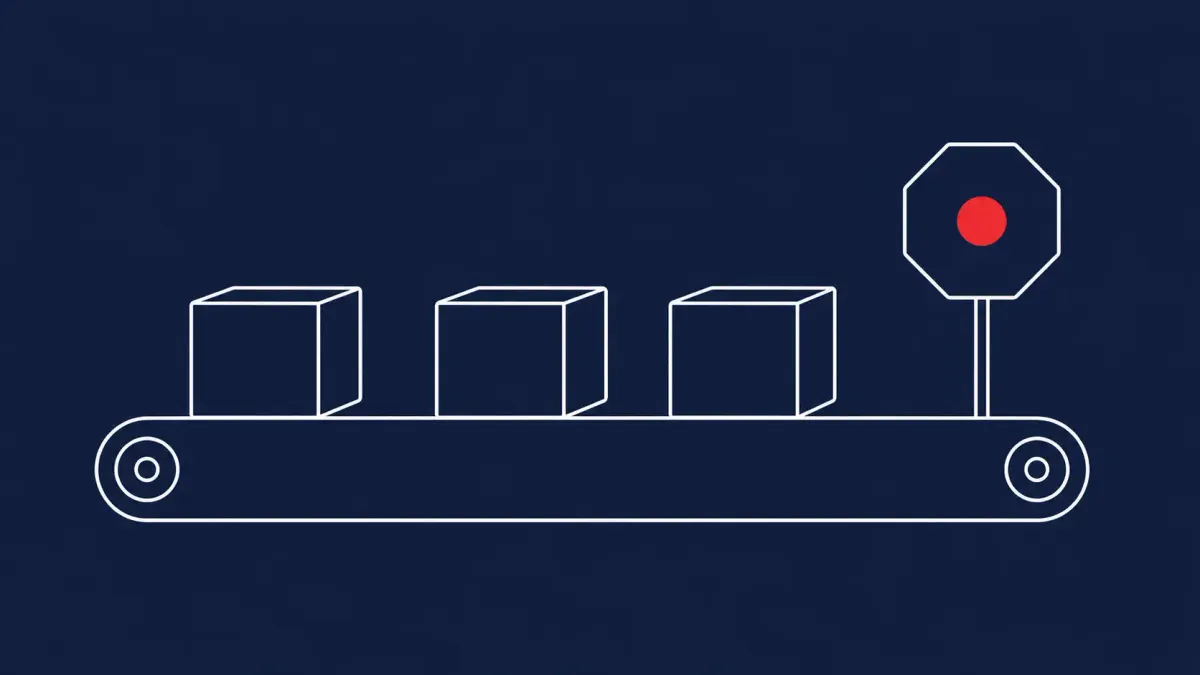
A retrospective frame on the most consequential law-enforcement effort against cybercrime infrastructure.
THE HAGUE — Operation Endgame, the Europol-coordinated campaign that has spent more than two years dismantling the infrastructure behind ransomware, was recast by its coordinators in late June 2026 as a single, sustained assault on the cybercrime "assembly line" rather than a series of one-off malware takedowns. In a June 24 statement, Europol said the main goal of its latest actions was "to disrupt the 'assembly lines' cybercriminals use to launch ransomware, financial fraud and attacks on critical infrastructure" — a phrase that has become the organizing idea for how authorities now describe, and measure, the work.
The retrospective framing arrives on the back of a dense few weeks. Within roughly one week in June 2026, authorities and their private-sector partners disrupted three malware families that sit at the front of the criminal pipeline — SocGholish, followed by Amadey and StealC — and tied the actions together as deliberate links in one chain rather than separate scalps.
What Coordinators Described
In its June 24 statement, Europol set out the through-line that connects the latest takedowns. The agency said the aim of the actions against SocGholish, Amadey and StealC was "to disrupt the 'assembly lines' cybercriminals use to launch ransomware, financial fraud and attacks on critical infrastructure." The language is deliberate: an assembly line implies discrete, specialized stations that each add value to a product, and Europol's coordinators used it to describe how a device compromise is converted into a stolen credential, and a stolen credential into the access a ransomware crew needs.
That description maps onto how the targeted malware actually behaves. As Infosecurity Magazine reported, Amadey served largely as the first link in a larger attack chain, able to introduce additional malware onto a compromised system, while StealC was built to extract passwords, stored access data and digital identities and make them available for resale and fraud. "Together, they form a critical link in the cybercrime supply chain," Europol noted. SocGholish, disrupted days earlier, occupies a similar opening position as a widely used loader feeding later-stage operators.
The coordinators were explicit that the strategy is to break the chain rather than to chase individual products. Microsoft, one of the private-sector partners, framed the same logic from the legal side, with its Digital Crimes Unit arguing that it is "no longer enough to go after threats one by one" and that defenders "need to interrupt how the attacks are put together." That is the retrospective frame in a sentence: Operation Endgame is being described less as a list of malware families removed and more as a sustained effort to make the entire pipeline harder to assemble.
The Cumulative Operation Endgame Timeline
Operation Endgame did not begin in June 2026. It is a multi-year campaign whose earlier chapters targeted the botnets and initial-access malware that feed the same ransomware economy. A May 2025 phase, for example, took down roughly 300 servers and neutralized 650 domains while disrupting tools such as Bumblebee, Qakbot, DanaBot, Trickbot and Warmcookie, and authorities issued international arrest warrants against 20 suspects. Later phases through 2025 went after additional networks, building a pattern of repeated, coordinated strikes against the early stages of the attack chain.
The June 2026 chapter is the latest entry in that sequence, and the figures Europol attached to it convey the scale. Beyond the takedowns themselves, the agency reported that the chapter resulted in 41 million euros (about 46.5 million dollars) of crypto assets of criminal origin identified and frozen and 27 million stolen login credentials recovered. Officers and their partners also took down 326 servers and seized 142 domains, which Europol said "severely crippling the malware's distribution network." The same multi-operator, multi-server pattern echoes earlier Endgame actions, including the 300-server, 20-operator takedown that established the campaign's template.
Reading the chapters together is the point of the retrospective. Each individual action — a loader here, an infostealer pair there — is modest in isolation, but the coordinators' framing asks observers to total them up: a yearslong run of strikes against the same supply chain, accumulating into a body of seized infrastructure, recovered credentials and frozen funds that no single takedown would produce. The assembly-line language is, in effect, a way of accounting for that cumulative weight.
Defender Takeaways for Affected Organizations
For defenders, the most actionable detail in the June chapter is the 27 million recovered credentials. Stolen login data is the raw output of the infostealer stage of the assembly line, and recovered credentials typically flow to notification services and into datasets that organizations can check against their own users. Teams should treat the disruption as a prompt to review exposure: confirm that credentials tied to corporate identities have not been circulating, and use the moment to push residual hardening such as multi-factor authentication and credential rotation where exposure is plausible.
A takedown is also not a cure. Europol and its partners have been consistent that ransomware crews routinely adapt their malware or re-form under new names after arrests and infrastructure seizures, so the disruption buys time and raises cost rather than ending the threat. The durable defensive posture is the one that does not depend on any single family staying down: layered controls, monitored access and an incident-response program that assumes the next loader is already being built. The assembly-line frame is useful to defenders precisely because it points at the chain rather than the brand: hardening the stages an intruder must pass through outlasts the disruption of any one tool.
Organizations that were touched by Amadey, StealC or SocGholish specifically should also watch for follow-on outreach. Microsoft said it identified over 18,000 victim computers during the action, severed criminal control of those devices and began working with telecommunications providers to help affected customers — meaning some organizations may learn of historic compromise through provider or law-enforcement notification rather than their own telemetry. Treating such a notice as a trigger for forensic review, rather than as closure, is the prudent reading.
How the Assembly-Line Framing Changes Coordinated-Action Expectations
The shift from "we took down malware X" to "we disrupted the assembly line" changes what a successful operation is expected to look like. Under the older frame, a takedown was scored on whether a named botnet went dark. Under the assembly-line frame, the question becomes whether the broader pipeline is harder to operate — whether the loader, the infostealer and the access broker can still hand off to one another as cheaply as before. That is a higher bar, and it implies that future actions will increasingly be sequenced and bundled rather than announced as isolated wins.
The legal mechanics reinforce the strategy. As CyberScoop reported, in the Amadey and StealC action Microsoft paired the takedown with an expanded use of the U.S. Racketeer Influenced and Corrupt Organizations Act, using it to treat separately developed malware families that shared infrastructure as part of a single conspiracy. That is the assembly-line logic encoded in court filings: if the tools are designed to work together, the argument goes, the enablers across the operation can be charged together. Coordinated technical disruption and coordinated legal theory are being made to point at the same target.
For observers and defenders alike, the practical expectation is that coordinated actions will come in clusters with a stated narrative, that cumulative metrics — total servers, total credentials, total funds — will be foregrounded over single-family body counts, and that the gaps between chapters may shorten as authorities and industry partners rehearse the model. None of that guarantees the criminal supply chain stays broken, but it does change how each new announcement should be read: as one move in a continuing campaign, not a finale.
Open Questions
Several questions remain genuinely open. The June 2026 chapter was reported as an infrastructure disruption; arrests were not announced as part of this specific action, leaving the question of attribution and prosecution of the operators behind SocGholish, Amadey and StealC unresolved for now. Whether those operators re-emerge under new names, as past Endgame targets have, will be the clearest test of how much the assembly-line disruption actually slows the pipeline versus merely rerouting it.
It also remains to be seen how durable the cumulative metrics are. Recovered credentials and frozen crypto assets are concrete, but the lasting effect of a takedown depends on whether seized servers and domains stay down and whether replacement infrastructure is cheaper or dearer to stand up than before. The coordinators' own caution — that crews adapt and reorganize — is itself an acknowledgment that the headline figures describe a moment, not a permanent state.
What is established is enough to characterize the moment fairly: a multi-year, Europol-coordinated campaign whose coordinators have, in mid-2026, converged on a single organizing idea — disrupting the assembly line — and backed it with a chapter that took down 326 servers, seized 142 domains, recovered 27 million credentials and froze tens of millions in criminal funds. Whether that frame proves to be a turning point or a well-told retrospective will be answered by the chapters that follow.
The CyberSignal Analysis
The reported facts above are Europol's and its partners'; what follows is The CyberSignal's editorial reading of what the assembly-line framing means for defenders and observers. None of the judgments below are new reported facts.
Signal 01 — Disrupting an Ecosystem Is a Different Game Than a Single Takedown
The most important thing the assembly-line frame does is change the unit of analysis. A single-actor takedown asks whether one botnet or one crew went dark; an ecosystem disruption asks whether the chained services — loader, infostealer, access broker — can still hand off to one another cheaply. Our reading is that this is a deliberate escalation in ambition, not just rebranding. Europol is no longer claiming to have removed a product; it is claiming to have raised the cost of assembling the whole pipeline, and that is a materially harder thing to achieve and to prove.
That difference has a cost of its own. An ecosystem disruption depends on hitting multiple, separately operated stages in a coordinated window, which requires sustained intelligence-sharing and legal alignment across jurisdictions and private partners. The upside is durability; the risk is diffusion of effort. Our assessment is that this model only pays off if the strikes are tightly sequenced — a loader takedown that lands weeks apart from the infostealer action lets the chain re-route in between.
Signal 02 — The Framing Resets What Defenders Should Expect From Each Announcement
Under the old frame, defenders could read a takedown announcement as a discrete event: a named threat retired, a box checked. The assembly-line framing asks them to read each announcement as one move in a continuing campaign, with cumulative metrics — total servers, total credentials, total funds — foregrounded over single-family body counts. Our interpretation is that this changes the practical response: the right reaction to a chapter is not relief that a family is gone but a prompt to check exposure against the recovered-credential datasets and to assume the next loader is already in development.
It also sets an expectation about cadence. If authorities are bundling and narrating strikes deliberately, defenders should anticipate clusters rather than isolated wins, and shorter gaps between chapters as the model is rehearsed. The useful posture is to treat any single announcement as provisional — the campaign is the story, and the individual takedown is a data point within it rather than a conclusion.
Signal 03 — Cumulative Pressure Is a Hypothesis About the Market, Not Yet a Verdict
The retrospective's implicit claim is that repeated, accumulating strikes durably shift the criminal market — that enough seized infrastructure and recovered credentials eventually make the pipeline uneconomic to rebuild. Our assessment is that this remains a hypothesis. The coordinators' own caution, that crews adapt and re-form under new names, concedes that the headline totals describe a moment rather than a permanent state. The honest test is not the size of any one chapter but whether replacement infrastructure becomes measurably dearer to stand up over successive chapters.
That makes the durability question the one worth tracking. If the same operators resurface quickly and cheaply, the cumulative metrics will read as an impressive tally with limited market effect; if standing the ecosystem back up gets harder each time, the assembly-line frame will have earned its billing. We would treat the coming chapters — the gaps between them and how fast the pipeline reconstitutes — as the real measure of whether cumulative pressure shifts the market or merely reshuffles it.



