One Debug Flag Exposed Microsoft Account Tokens Across Billions of Android Office Installs
A single debug setting left enabled in Microsoft's Android Office apps — Word, Excel, PowerPoint, OneNote, Loop and Microsoft 365 Copilot — let any other app on the same device read Microsoft account tokens, per a SecurityWeek exclusive. Microsoft has patched the flaws.

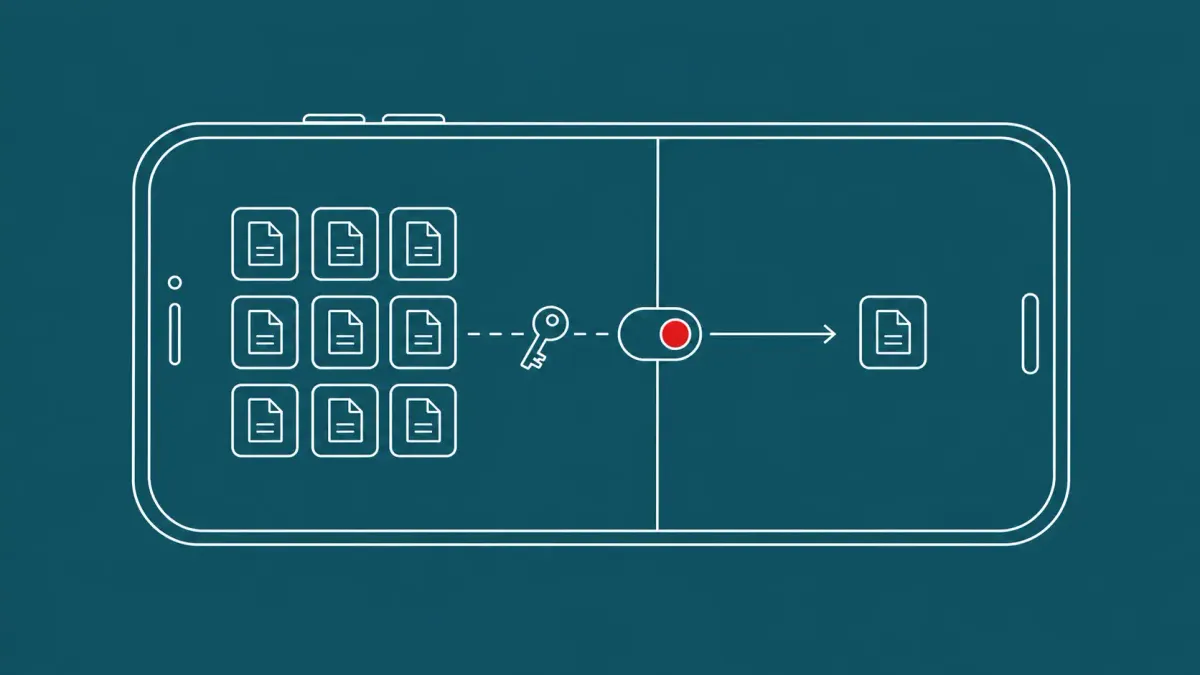
Mobile token isolation reads like a platform guarantee, but this is the reminder that it is really a developer-configuration promise — and a single setting flipped the wrong way in shipping code can void it across billions of installs.
REDMOND, Wash. — A single development setting left enabled in Microsoft's Android Office apps bypassed the protections meant to keep other apps on a device from reading a user's Microsoft account tokens, exposing billions of installations, according to an exclusive that SecurityWeek published on June 2, 2026.
The flaw — described as a debug flag, IsDebugMode, left switched on in production builds — was uncovered by Enclave, an AI-powered bug-hunting tool, and shared with SecurityWeek ahead of the research's public release. Microsoft assigned CVE numbers and shipped fixes around May 12, 2026.
What Happened
SecurityWeek reported on June 2, 2026 that a single development setting, left enabled in the shipping builds of Microsoft's Android Office apps, defeated the protection that is supposed to keep one app on an Android device from reading another app's Microsoft account tokens. According to the exclusive, the affected apps were Word, Excel, PowerPoint, OneNote, Microsoft Loop and Microsoft 365 Copilot for Android — a set whose combined install base runs into the billions. The setting, a debug flag the research identifies as IsDebugMode, was switched on in production rather than confined to development, and that one configuration choice is the 'one line of code' the headline refers to.
The consequence is a token-isolation failure. With the protection bypassed, any other Android app installed on the same device could obtain the Microsoft account tokens belonging to the affected Office app. The tokens in question are Microsoft FOCI — Family of Client IDs — tokens, which are designed to be refreshed and reused over long periods and across Microsoft's family of first-party clients. The research was produced by Enclave, an AI-powered tool that hunts for exploitable bugs, and shared with SecurityWeek ahead of its public release; Microsoft assigned CVE numbers and distributed fixes around May 12, 2026, through Patch Tuesday and directly to the Google Play Store. As reported, there is no indication the flaw was exploited in the wild before it was fixed.
What the 'One Line of Code' Actually Was
The phrase 'one line of code' is doing a lot of work in the headline, and it is worth being precise about what it means. This was not a memory-corruption bug or a logic flaw in Microsoft's token handling; it was a configuration setting. Android apps commonly carry a debug mode that loosens certain protections to make development and testing easier, and that mode is supposed to be switched off before an app ships. According to the research, Microsoft's Android Office apps shipped with that debug flag — IsDebugMode — left enabled, and in that state the operating-system-level protection that normally walls off one app's Microsoft account tokens from other apps on the device was not enforced. The fix, correspondingly, was to turn the setting off. That a single flipped flag in production is enough to expose account tokens across billions of installs is precisely what makes this noteworthy: the failure was mundane, and its blast radius was enormous.
Why FOCI Tokens Make a Leak Serious
The reason a leaked token from a document editor matters beyond that one app is the kind of token involved. Microsoft FOCI — Family of Client IDs — tokens are built to be redeemable across Microsoft's family of first-party applications: a refresh token issued to one family member can be exchanged for access tokens usable by others. That design is convenient for users, who get seamless sign-in across Microsoft apps, but it means a token harvested from, say, Word is not necessarily limited to Word. According to the reporting, an attacker-controlled app that obtained one of these tokens could use it to reach Microsoft account data exposed through the affected app's context, and because the tokens are reusable and refreshable over long periods, that access could persist quietly rather than expiring quickly. The practical upshot is that the document app is the entry point, but the Microsoft account behind it is the prize.
Found by an AI Bug-Hunter — and the Developer-Discipline Lesson
Two threads of this story connect it to coverage The CyberSignal has tracked. The first is who found it: Enclave, an AI-powered exploitable-bug-hunting tool, which adds this to the run of AI-discovered vulnerabilities reshaping disclosure — alongside Google's account of the first AI-developed zero-day under mass exploitation. The second is the root cause, which is a developer-configuration failure rather than a coding flaw — the same class of soft spot behind incidents like the Microsoft 'Mini Shai-Hulud' npm typosquats that turned on developer and CI/CD discipline. And because the prize here is a Microsoft account token, the incident sits inside the broader identity-and-token attack surface that includes the Tycoon2FA OAuth device-code variant that turns Microsoft's own login page against M365 — token theft, however it happens, lands in the same place.
Scope and Impact
The scale is the headline — billions of installs across the affected Office apps — but two qualifiers keep it calibrated. First, this is a single-source exclusive at publication: the account comes from SecurityWeek's reporting of Enclave's research, and no in-the-wild exploitation has been reported. Second, Microsoft has already fixed the flaw and issued CVEs, around May 12, 2026, which means the live exposure window largely closes as devices take the updated app builds. The residual risk is concentrated where it usually is on Android — devices still running outdated app versions. The exposure also rhymes with the consumer-identity attack surface this cycle, from the Dashlane new-device-token-flow brute-force lockouts to the Signal recovery-key phishing wave: the credential or token that gates an account is the thing attackers want, and the app that holds it is just the means.
What raises the stakes for enterprises specifically is that a Microsoft account token is not a single app's data — it gates corporate access. An executive's phone carrying the affected Office apps alongside an unvetted third-party app was, before the patch, a place where that third-party app could in principle have lifted a token that unlocks far more than a document. That is the same malicious-app threat model behind consumer Android spyware like the Morpheus spyware that hid behind fake updates and hijacked WhatsApp — and it is the scenario regulated industries, defense, and executive-protection programs should reason about when they decide how quickly to force the update and whether to audit for anomalous token activity in the affected window.
Response and Attribution
The immediate action is a version sweep. Confirm that Word, Excel, PowerPoint, OneNote, Microsoft Loop and Microsoft 365 Copilot are on the post-fix builds across every managed Android device, and push the updates through your MDM rather than relying on users to update. For organizations with a strict mobile posture, review Microsoft Entra sign-in and token-refresh logs for the affected window for anything anomalous coming from Android devices — unexpected geographies, unusual app contexts, or refresh patterns that do not match a user's behavior — and treat any Microsoft account token compromise as a Tier 1 incident, because the token gates corporate access rather than one app's data. Conditional Access remains the strongest compensating control: tune it so that account access depends on a compliant, patched device, and revisit any policy that implicitly assumes Microsoft's own apps are inherently safe, since this finding is the counterexample.
On framing, this is a disclosed-and-fixed flaw rather than an attack: there is no threat actor to name, no campaign, and — as reported — no evidence of exploitation before the fix. The responsible posture is to treat it as a closed-but-instructive exposure, prioritize getting every device onto the patched builds, and resist describing it as an active breach. The durable lesson is the one the root cause hands defenders for free: mobile-app token isolation depends on developer-side configuration discipline, not on a platform guarantee, so an organization's own mobile apps deserve the same scrutiny — a check that debug flags are off in production is cheap insurance against a very expensive class of mistake.
The CyberSignal Analysis
Signal 01 — Mobile Token Isolation Is a Config Promise, Not a Platform Guarantee
It is comfortable to assume that the operating system keeps one app's secrets away from another app, and most of the time it does. But this incident shows that the guarantee is conditional on the app developer configuring things correctly: a debug flag left enabled was enough to switch the protection off across billions of installs. The lesson generalizes well beyond Microsoft. Any organization that ships a mobile app handling tokens, credentials, or sensitive data is one misconfigured build setting away from the same failure, and the controls that catch it are unglamorous — build-time checks that debug modes are disabled in release builds, configuration review in the release pipeline, and treating mobile-app hardening as a first-class part of the SDLC rather than an afterthought. The platform helps, but it does not absolve the developer.
Signal 02 — FOCI Tokens Turn One App's Leak Into Account-Wide Exposure
The detail that elevates this from an Office-app bug to a Microsoft-account problem is the token type. Because FOCI tokens are designed to be refreshed and redeemed across Microsoft's family of first-party clients, a token leaked from a document editor is not contained to documents — it is a foothold against the broader account. That is a deliberate convenience feature working as intended in an unintended context, and it is a useful reminder for defenders that the blast radius of a token leak is defined by what the token can be exchanged for, not by which app leaked it. When evaluating any mobile token-exposure issue, the right question is not 'what does this app access?' but 'what does this token unlock once an attacker holds it?' — and for a refreshable family token, the answer is usually 'more than you'd think.'
Signal 03 — An AI Bug-Hunter Found It First
It matters that this flaw was surfaced by Enclave, an AI-powered exploitable-bug-hunting tool, rather than by a human researcher stumbling onto it. AI-driven vulnerability discovery is moving from novelty to fixture, and it cuts both ways: the same capability that lets defenders and vendors find latent flaws like a stray debug flag at scale is, in other hands, a way to find exploitable bugs faster than patching can keep up. The optimistic read here is the one that played out — an AI tool found a billions-of-installs exposure, the vendor fixed it, and disclosure happened responsibly. The sober read is that the discovery rate is rising on both sides, and organizations should assume that the latent misconfigurations in their own mobile apps are now findable by automated tooling, by whoever points it at them first.