BRIDGE:BREAK — Forescout Discloses 22 Vulnerabilities Exposing Global OT and Healthcare Infrastructure

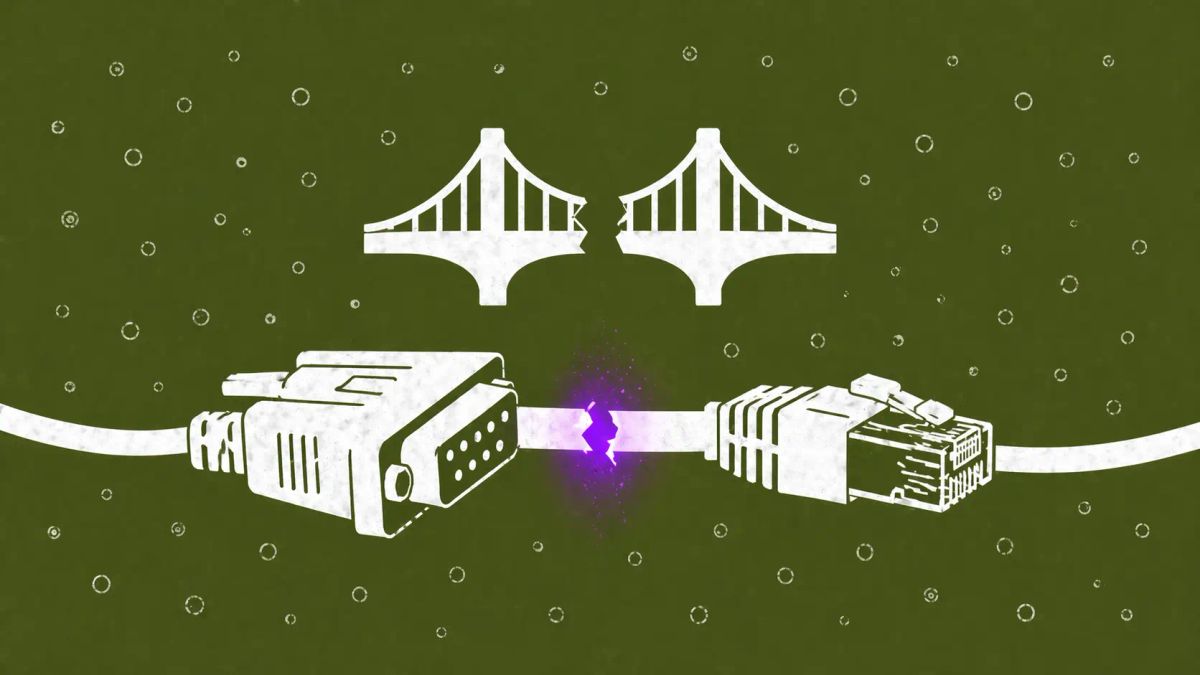
An investigation into the "connective tissue" of the industrial internet reveals that thousands of legacy Serial-to-IP converters are currently vulnerable to unauthenticated remote code execution.
SAN JOSE, CA — Forescout’s research division, Vedere Labs, has released a comprehensive security advisory titled "BRIDGE:BREAK," detailing 22 newly discovered vulnerabilities across widely used Serial-to-IP converters. These devices, which serve as the bridge between legacy serial hardware and modern IP networks, are critical components in healthcare, power grids, and manufacturing plants.
The research identifies a catastrophic "security lag" in these obscure but essential devices. By exploiting these flaws, attackers can gain direct access to the serial consoles of sensitive industrial equipment, allowing them to manipulate physical processes, steal data, or crash critical systems.
Impacted Vendors & CVE Overview
The Vulnerability Breakdown
The 22 vulnerabilities span across major manufacturers including Perle, Silex, and others. The flaws range from hardcoded credentials to buffer overflows and unauthenticated Remote Code Execution (RCE).
According to CISA Advisory ICSA-26-069-02 and Forescout’s technical brief:
- The "Forgotten" Interface: Serial-to-IP converters were often designed for connectivity rather than security. Many lack the memory or processing power to support modern encryption or authentication protocols.
- Mass Exposure: Using global scanning tools, Forescout identified over 14,000 devices exposed directly to the public internet, primarily in the United States, Germany, and Japan.
- Vertical Impact: In healthcare, these converters are used to link patient monitors and laboratory equipment to the hospital network. In OT, they manage everything from HVAC systems to substation relays.
RCE and the Legacy Trap
The "BRIDGE:BREAK" report highlights a recurring theme in infrastructure security: the "connective tissue" is often the weakest link. Many of the identified RCE flaws allow an attacker to send a single malformed packet to the device to gain a root shell. Because these devices often sit "behind" the perimeter but have direct physical connections to high-value assets, they act as a perfect pivot point for lateral movement.
The CyberSignal Analysis
Signal 01 — The "Connectivity over Security" Legacy
This incident is a definitive "Signal" for third-party risk. We are currently paying the "Legacy Tax" for decisions made 15 years ago to connect everything to the cloud. For B2B leaders, this is a reminder that your security posture is only as strong as your most obscure adapter. These devices are often unmanaged and unmonitored, representing a deep supply chain risk where the hardware vendor’s lack of a secure development lifecycle becomes your operational crisis.
Signal 02 — Intelligence-Driven Segmentation
This is a high-fidelity "Signal" for threat intelligence. You cannot patch your way out of "BRIDGE:BREAK" quickly because these devices are often in "set-it-and-forget-it" locations. The intelligence suggests that attackers are already scanning for these specific hardware fingerprints. The only immediate defense is micro-segmentation. These converters should never be reachable from the public internet or even the general corporate LAN. In 2026, resilience means assuming your hardware is vulnerable and building "virtual cages" around every legacy bridge.