Anodot Compromise Triggers Cascading Extortion Attacks Across Snowflake Customer Base

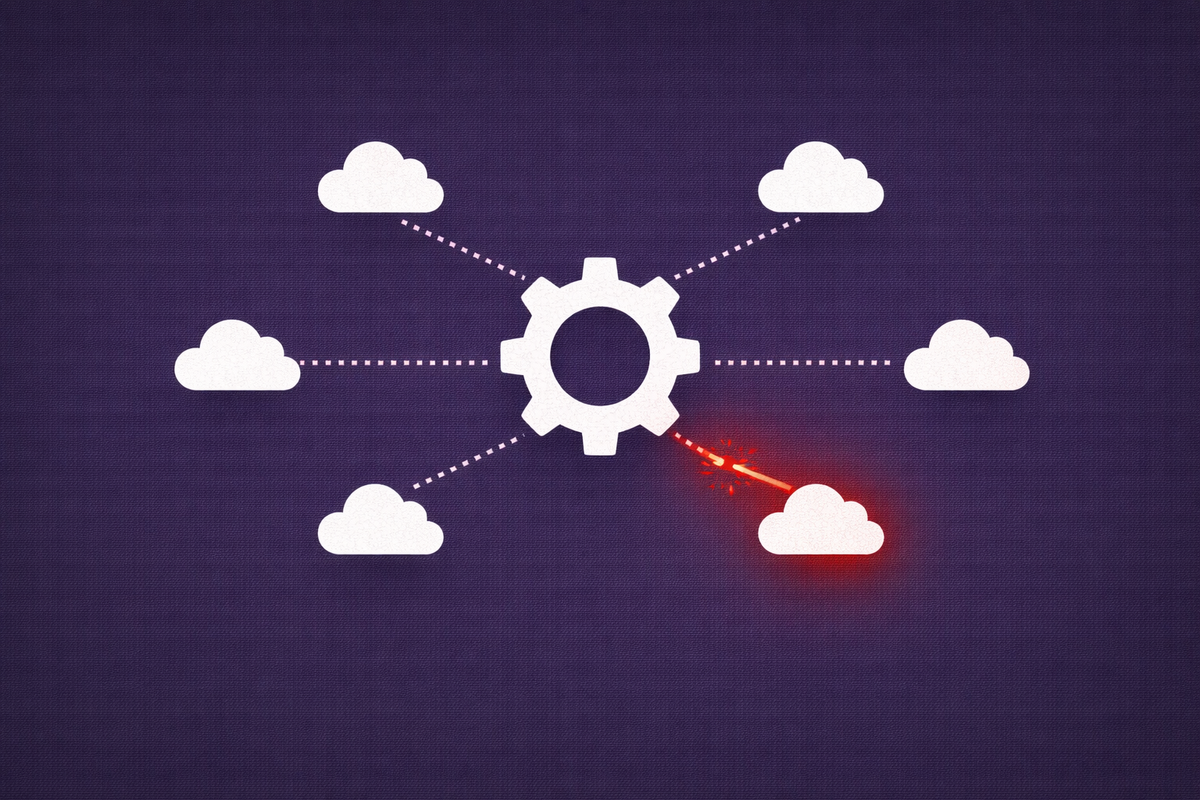
Snowflake says the cloud-cost monitoring firm Anodot suffered a security incident that preceded a series of high-profile data thefts. Anodot itself has never publicly confirmed a breach. The episode highlights the extreme risk of third-party integrations holding elevated cloud permissions.
RA'ANANA, Israel — Snowflake has confirmed that Anodot, the third-party integration platform specializing in AI-driven cloud cost monitoring and anomaly detection, suffered a security incident, and that Snowflake subsequently detected "unusual activity" in some of its customers' data stores. Snowflake said a small number of its customers were impacted, cut Anodot customers off from their cloud data in response, and stressed that its own systems were not compromised. Anodot itself has never publicly confirmed a breach: its status page disclosed only an incident beginning April 4, 2026 in which its data connectors stopped working — framed as an availability problem rather than a compromise — and Glassbox, which owns Anodot, did not respond to TechCrunch's inquiries.
The incident gained international attention after the threat group ShinyHunters claimed responsibility, asserting that they used stolen Anodot credentials to gain unauthorized access to the Snowflake environments of Anodot's clients.
Update (August 26, 2026): The April 14 extortion deadline passed without payment. Rockstar Games refused to pay, and ShinyHunters subsequently leaked roughly 78.6 million records. Read our full coverage of the leak.
The Vector: Stolen Service Tokens
Unlike traditional brute-force attacks, the intrusion at Anodot appears to have targeted the "trust relationship" between the SaaS provider and its customers. Anodot’s core functionality requires it to have read-access to a client’s cloud billing and usage data to perform its monitoring duties.
According to the RH-ISAC advisory on the campaign, authentication tokens were the primary attack instrument, bypassing traditional password-based controls, and the stolen tokens were used to pull data from victims' Snowflake instances. RH-ISAC also documents an attempted lateral pivot from Snowflake into Salesforce, which was detected before it succeeded.
Rockstar Games and the "Cascading" Impact
Anodot has not publicly listed any affected clients; the names now in circulation come from threat actor leaks and subsequent company disclosures. ShinyHunters claims this incident was its route into the recent breach and ransom ultimatum involving Rockstar Games, posting on its leak site that Rockstar's Snowflake instances were compromised "thanks to Anodot.com." Snowflake confirmed to BleepingComputer that Anodot was the third-party integration platform that suffered the security incident, and that a small number of its customers were affected. The specific Rockstar-to-Anodot chain, however, rests on the attackers' own claim rather than on any confirmation from Rockstar or Anodot — and Anodot has never publicly acknowledged a compromise.
As reported in our follow-up on Rockstar's incident response, Rockstar characterised the data accessed as "non-material." On the attackers' account, the Anodot integration acted as a "side-door" that let ShinyHunters reach data held in Rockstar's Snowflake environment without engaging the gaming giant’s own perimeter controls — a sequence consistent with Snowflake's statement, but not independently confirmed by either company.
The Extortion Demands
The fallout has moved rapidly from data theft to active extortion. TechCrunch reports that over a dozen companies are currently being pressured by ShinyHunters, who have threatened to leak proprietary financial models, internal telemetry, and customer usage data unless high-value ransoms are paid.
The group's tactic is surgical: they are not encrypting systems (ransomware), but rather practicing "pure extortion" — holding the threat of public disclosure over companies that rely on their data integrity for market valuation.
The CyberSignal Analysis
Signal 01 — The "Monitoring" Paradox
The very tools designed to provide visibility (Anodot) often create the largest blind spots. This incident underscores the "Integration Tax" — every SaaS tool added to a cloud environment expands the attack surface. For B2B leaders, this is a clear signal to audit the IAM (Identity and Access Management) permissions of all third-party monitoring tools. If a service only needs to read billing data, it should never have permissions that allow for mass data exfiltration.
Signal 02 — The Death of Passive Trust
The Anodot incident is a textbook example of why Supply Chain Security must move toward a "Least Privilege" model. That stolen third-party authentication tokens could be replayed to exfiltrate customer data at all highlights a systemic gap in how SaaS-to-SaaS permissions are governed. Organizations must treat "service accounts" with the same — if not more — scrutiny as human administrator accounts.



