What Is Identity and Access Management (IAM)?

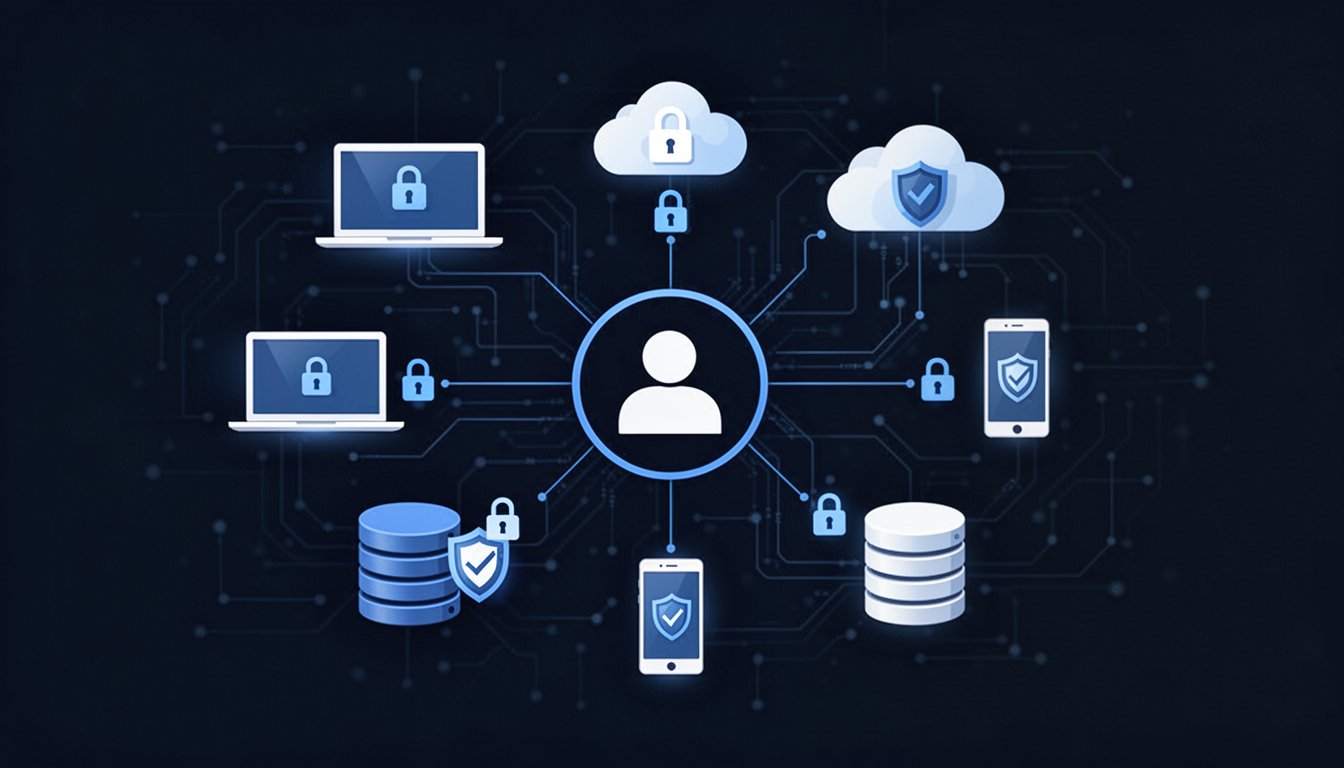
Identity and access management (IAM) has emerged as a core pillar of modern cybersecurity strategies. This guide covers the fundamentals of IAM, including its core components, deployment models, and strategic importance for organizations of all sizes. It is intended for IT professionals, security leaders, and business decision-makers seeking to understand how IAM supports secure and efficient operations in today's digital landscape.
Identity access management is a cybersecurity discipline focused on provisioning and securing digital identities and user permissions within IT systems. An identity management system serves as the comprehensive IT solution that manages digital identities, authentication, and access authorization across the enterprise. Whether an organization is managing internal users, vendors, or contractors, ensuring secure access to the enterprise network is no longer just an IT requirement — it is a business necessity.
Understanding Identity and Access Management
Identity and access management (IAM) is a framework of policies and technologies to ensure that the right users have the appropriate access to technology resources. At its heart, an IAM solution identifies, authenticates, and controls access for individual users utilizing IT resources.

Digital identities capture traits such as a user's name, login credentials, job title, and access rights. These identities are stored in directory services. Directory services are where IAM systems store and manage data about users' identities, credentials, and access permissions. Identity administration involves creating, maintaining, updating, and securely disposing of digital identities within the IAM system. Essentially, IAM tools help ensure that the right people can access the right resources for the right reasons at the right time.
Access Management IAM: The Core Components
To manage user access effectively, iam systems rely on two fundamental processes: authentication and authorization.
- Authentication: This is the process that verifies that a user is who they claim to be. This often requires users to provide multiple forms of evidence, such as multi-factor authentication (MFA), to verify a digital identity.
- Authorization: This is the process of granting verified users the appropriate levels of access to a resource. It ensures that after a user is identified, they only gain access to the specific sensitive data required for their role.
Controlling User Access with RBAC and ABAC
Two common frameworks used to control access include:
- Role-based access control (RBAC): Role-based access control (RBAC) is a common access control framework where users' privileges are based on their job functions. A framework where access privileges are assigned based on job functions. This is a common access control model used to manage user identities across large organizations.
- Attribute Based Access Control (ABAC): This model uses user identity information, environmental context, and resource attributes to make real-time decisions about access rights. According to NIST standards, ABAC provides the granular control necessary for highly dynamic cloud environments.
IAM Systems and Technologies
Identity and access management systems have evolved into the critical infrastructure that determines whether organizations can effectively control who gets into their networks — and what they can do once they're there. These platforms centralize the complex task of managing digital identities while enforcing access controls across entire enterprises, handling everything from employee onboarding to third-party vendor permissions.
Automation and Access Provisioning
Modern IAM platforms excel at automating what used to be manual, error-prone processes around access provisioning. When implemented correctly, these systems can instantly grant new employees the exact permissions they need, modify access as roles change, and immediately revoke credentials when someone leaves the organization. This automation doesn't just save time — it significantly reduces the security gaps that emerge when access changes are delayed or forgotten entirely.
Principle of Least Privilege
The access management capabilities within these systems represent where theory meets practice in cybersecurity. Organizations can define granular permissions that map directly to job functions, ensuring that a marketing coordinator can't accidentally stumble into financial databases or that contractors only see the specific projects they're working on. This principle of least privilege isn't just a security best practice — it's become a practical necessity as attack surfaces continue to expand.
Compliance and Audit Trails
Compliance requirements have transformed IAM from a convenience into a business imperative. Whether organizations are dealing with GDPR's strict data protection mandates or HIPAA's healthcare privacy rules, IAM systems provide the audit trails and policy enforcement that regulators expect to see. The detailed logging capabilities can make the difference between passing an audit and facing significant penalties.
As digital infrastructures grow more complex and remote work becomes permanent for many organizations, IAM systems are no longer optional infrastructure — they're the foundation that makes secure, scalable operations possible. Organizations that invest in sophisticated IAM capabilities today are positioning themselves to handle tomorrow's security challenges while maintaining the flexibility their business operations demand.
Why Is Access Management Important?
Access management is important because it directly impacts an organization’s security posture. Implementing IAM allows businesses to protect sensitive information and prevent unauthorized access to high-value data. IAM solutions utilize advanced technologies to enhance security by implementing multi-factor authentication, single sign-on, and device-based access controls, addressing new security challenges in remote work and BYOD environments.
Enhancing Security and Reducing Risk
IAM systems can significantly reduce the security risks of data breaches by implementing advanced authentication methods, such as:
- Multi-factor authentication, which makes it so that cybercriminals need more than just a password to get in, which is vital for identity protection in remote work environments.
- User activity tracking to detect unusual patterns or anomalies.
According to the 2026 CrowdStrike Global Threat Report, identity-based attacks are now the primary vector for enterprise breaches.
Improving Operational Efficiency
Implementing IAM systems can improve operational efficiency by automating identity lifecycle management tasks, such as:
- User provisioning (onboarding)
- Deprovisioning (offboarding)
By managing access through automation, organizations reduce the administrative workload for IT departments and system administrators.
Simplifying Access with Single Sign On
IAM systems enhance user experience by providing single sign on (SSO) capabilities. This allows authorized users to access multiple applications with one set of credentials, simplifying access and reducing password fatigue.
IAM Solution Deployment: Private and Public Clouds
Modern identity management often involves private and public clouds. Cloud-based solutions, known as Identity-as-a-Service (IDaaS), support secure user access from various mobile devices across distributed networks.
Cross Domain Identity Management
In complex environments, cross domain identity management and identity federation allow a central identity provider to provide secure access across different identity domains. Standards like Security Assertion Markup Language (SAML) and OpenID Connect facilitate this security assertion, allowing for a secure identity regardless of where the resource is hosted.

Regulatory Compliance and Identity Governance
IAM systems help organizations meet regulatory compliance requirements, such as the General Data Protection Regulation (GDPR) and the Health Insurance Portability and Accountability Act (HIPAA).
By implementing strict access controls and identity governance, companies can ensure compliance through detailed auditing. Auditing is a core function of identity management systems that tracks user accounts and user behavior to ensure that access based on policy is being strictly followed.
Strategic IAM Tools: PAM and Zero Trust
For the most sensitive parts of a network, organizations use Privileged Access Management (PAM). This sub-category of IAM focuses on controlling user access for privileged accounts that have the authority to make system-wide changes.
Furthermore, IAM is essential to Zero Trust, a security model that assumes all users and devices are untrusted until proven otherwise. By following the principle of least privilege, IAM systems ensure users have only the lowest permissions necessary to complete a task.
Frequently Asked Questions (FAQ)
What is the difference between identity management and access management?
Identity management focuses on managing the digital identity itself (creation, deletion, and attributes), while access management focuses on controlling user access to resources based on that identity.
How does an IAM system improve security for remote work?
IAM tools enable secure user access via multi-factor authentication and can monitor user activity for anomalies, ensuring that only authorized users on verified mobile devices can gain access to sensitive information.
What are the main benefits of implementing IAM?
The main benefits include:
- Preventing unauthorized access
- Ensuring compliance with laws like HIPAA
- Simplifying access for users through single sign on
What is an IAM solution for privileged users?
Privileged Access Management (PAM) is a specific type of IAM solution designed to manage user access for system administrators and others with access privileges to sensitive data as defined in CISA's IAM guidelines.