MFA Bypass Attacks: How They Work and How to Prevent Them


Introduction to MFA Bypass
MFA (multi-factor authentication) enhances security by requiring two or more verification factors before granting access. MFA is more secure than traditional single-factor authentication (SFA), which only requires one set of login credentials, usually a username and password. As organizations increasingly rely on MFA to protect critical systems and data, understanding the evolving threat landscape is essential. This guide is intended for IT professionals, security teams, and organizational leaders seeking to understand and defend against MFA bypass attacks.
A multi-factor authentication (MFA) bypass occurs when an attacker exploits weaknesses in MFA security controls to gain unauthorized access to an account. MFA bypass attacks are used by cybercriminals to avoid or circumvent MFA tools in order to gain access to user accounts. Despite MFA’s reputation as a robust security control, cybercriminals have refined their approach to circumventing these protections, developing advanced techniques that exploit both technical vulnerabilities and human psychology. From social engineering schemes that manipulate users into surrendering authentication codes to targeted phishing operations that capture credentials in real-time, threat actors continue to find creative ways around what many consider an essential security barrier. Organizations that understand these evolving attack vectors position themselves to better defend against unauthorized access attempts targeting their most valuable digital assets.
How MFA Bypass Attacks Work
Multi-factor authentication (MFA) is designed to be a robust security layer, but it is not invincible. An MFA bypass occurs when an attacker exploits weaknesses in MFA security controls to gain unauthorized access to an account. While multi-factor authentication (MFA) enhances security by requiring two or more authentication factors before granting access, cybercriminals are increasingly finding ways to circumvent these security measures. These attacks put an organization's most valuable assets — such as critical business data, proprietary information, and key resources— at risk.
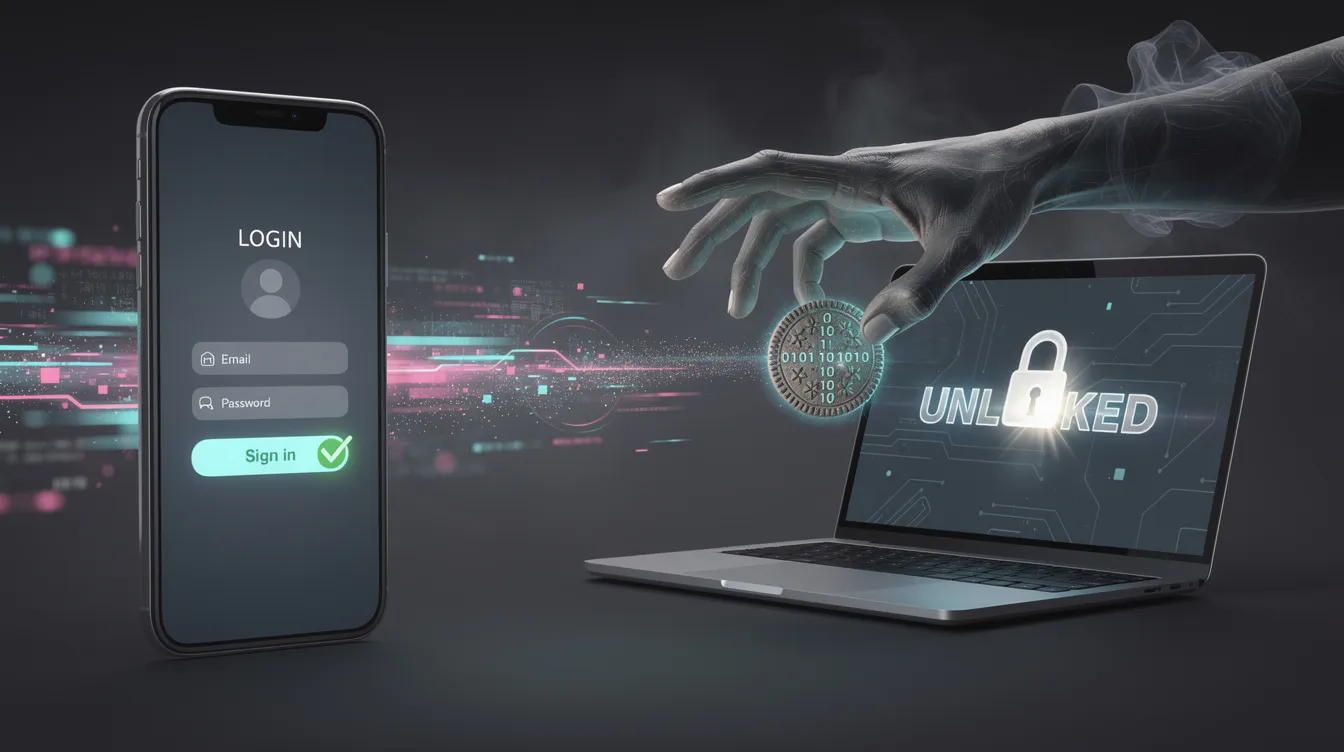
MFA bypass attacks are significant security threats because they defeat the purpose of having multiple layers of security protecting a system. The scale of this problem is growing; in 2023, Kroll observed attacks targeting 90% of organizations that already had MFA in place. Cisco Talos reports that in the first quarter of 2024, 50% of their incident responses involved MFA bypass attacks.
With this context in mind, let’s explore the requirements and vulnerabilities of MFA systems.
Understanding MFA Requirements
Understanding how to effectively combat multi-factor authentication bypass attacks requires a clear grasp of what makes MFA both powerful and vulnerable in today's threat landscape. At its core, MFA works by requiring users to present at least two distinct authentication factors — typically combining something they know (passwords), something they possess (hardware tokens or mobile-generated codes), or something they are (biometric identifiers). Yet cybercriminals have proven remarkably adept at exploiting the human and technical weaknesses inherent in these systems.
Sophisticated phishing campaigns now target users with convincing fake login portals designed to capture both passwords and real-time MFA tokens, while social engineering attacks manipulate victims into approving legitimate-looking authentication prompts that actually grant attackers system access. Even robust authentication implementations can crumble when users lack security awareness or when organizations deploy MFA solutions with configuration flaws or design weaknesses. The reality facing security teams today is that preventing MFA bypass requires not just understanding the technical requirements of multi-factor systems, but also recognizing how threat actors exploit both technological vulnerabilities and human psychology to circumvent these critical security controls.
With this understanding of MFA's strengths and weaknesses, let's examine how attackers exploit these systems.
The Role of Bypass Attacks
Bypass attacks represent the primary mechanism behind successful MFA circumvention, allowing threat actors to sidestep multi-factor authentication safeguards and penetrate protected systems. These sophisticated intrusions demonstrate remarkable adaptability, exploiting implementation weaknesses, human psychology, and fundamental flaws within authentication frameworks. Security teams are increasingly encountering MFA fatigue campaigns, where attackers flood users with authentication prompts until frustration leads to approval, alongside session hijacking operations that steal browser cookies to completely bypass login procedures.
Vulnerabilities in SMS-based authentication and other verification methods provide additional attack vectors for determined adversaries. For organizations serious about preventing authentication bypass incidents, understanding these attack methodologies proves essential — revealing the critical importance of layered security architectures and continuous threat monitoring in today's evolving threat landscape.
Now, let’s look at the most common techniques attackers use to bypass MFA.
Common MFA Bypass Techniques
Threat actors use increasingly frequent and sophisticated MFA bypass techniques to get around MFA requirements. Once they bypass multi-factor authentication, they can gain VPN access, swipe passwords, and exfiltrate sensitive data.
Brute Force and Credential Stuffing
Brute force and credential stuffing attacks are common methods used to bypass MFA. Brute force attacks involve guessing the MFA code through trial and error, which can lead to account takeover if successful.
- Brute force attacks often succeed when users rely on simple codes or short pins instead of a complex alphanumeric combination.
- Implementing strong password policies can reduce the risk of successful brute force and credential stuffing attacks.
Social Engineering and MFA Fatigue Attacks
Social engineering remains a primary attack method. Attackers use social engineering tactics to convince users to share their MFA codes or authentication tokens. Attackers may manipulate users into revealing sensitive information, such as authentication codes or the victim's username, to facilitate further attacks. One specific method is the MFA fatigue attack, which involves overwhelming users with repeated MFA push notifications until they accept one just to stop the push notifications. The Lapsus$ hacking group famously exploited this by calling employees late at night to coerce approval of MFA prompts.
Adversary-in-the-Middle (AiTM) and Man-in-the-Middle
In an adversary-in-the-middle phishing attack, attackers insert themselves between the user and the legitimate service. Microsoft reported that these attacks targeted over 10,000 organizations, using phishing emails to steal login credentials and session cookies to bypass MFA. Some phishing attacks, such as OAuth consent phishing, can allow attackers to access account data without ever needing the user's password.
Session Hijacking
Session hijacking occurs when attackers steal authentication cookies from a legitimate user’s session. These session cookies allow the attacker to gain access to the victim’s account without triggering the MFA process or encountering an MFA checkpoint. It is crucial to protect the victim's account from compromise, as stolen authentication tokens or backup codes can also be used by attackers to bypass MFA and take control of the account.
SIM Swapping
SIM swapping is a unique form of social engineering where attackers convince a mobile carrier to transfer a victim’s phone number to a sim card owned by the attacker. This attack specifically targets the victim's phone number, enabling the attacker to intercept SMS-based authentication codes sent to that number. This allows the attacker to receive SMS based MFA codes directly, providing full access to the account.
With these techniques in mind, it’s important to understand how attackers exploit brute force and credential stuffing in more detail.
Exploiting Brute Force and Credential Stuffing
If MFA implementation is weak, attackers may attempt a brute force attack. This involves guessing the MFA code through trial and error. While MFA adds security, a successful brute force of a code can lead to a complete account takeover. Similarly, credential stuffing — using compromised passwords and password combinations from other breaches — is used to find accounts where MFA is not yet enabled.
As attackers continue to exploit technical and human vulnerabilities, legacy protocols present another avenue for bypassing MFA.
Bypassing MFA through Legacy Protocols
Exploiting vulnerabilities in older systems is a common MFA bypass strategy. Threat actors target legacy authentication methods, such as IMAP or POP, which often do not support multi factor authentication MFA. For example, the Colonial Pipeline attack was traced back to a single user's password used on a legacy VPN without MFA enabled.
To counter these evolving threats, organizations must implement robust technical controls and best practices.
How to Stop MFA Bypass Attacks
To prevent MFA bypass, organizations must move beyond single factor authentication and adopt phishing resistant methods.

Prevent MFA Bypass with Technical Controls
- Restrict Login Attempts: Limiting the number of MFA requests sent can thwart MFA fatigue attacks.
- Disable Legacy Protocols: Disabling IMAP and POP helps stop MFA bypass attacks targeting older systems.
- Phishing-Resistant MFA: Using security keys and standards like FIDO2 can help protect against social engineering.
- Conditional Access Policies: Implementing conditional access policies that evaluate ip addresses and login locations can block unauthorized access.
Strengthening the Authentication Process
- Biometric Authentication: Implementing biometric authentication provides a more secure second factor.
- Zero Trust: Adopting a Zero Trust approach ensures continuous verification of users access, limiting the impact of stolen credentials.
- Real-Time Monitoring: User logs and account activity should be monitored in real-time to catch suspicious MFA prompts. Tools like Vectra AI use over 150 models to detect when an attacker tries to bypass MFA. By implementing these controls, organizations can significantly reduce the risk of MFA bypass attacks. However, technical controls alone are not enough — comprehensive mitigation strategies are required.
Mitigating the Effects of MFA Bypass
Defending against MFA bypass attacks demands a comprehensive security strategy that weaves together robust technical safeguards, strategic user training, and continuous security posture assessment. Smart organizations are turning to conditional access frameworks that scrutinize user location and device characteristics before granting access, while simultaneously deploying biometric authentication and other phishing-resistant technologies that significantly raise the bar for attackers.
The security landscape evolves rapidly, making regular audits and updates to MFA implementations not just recommended but essential for staying ahead of emerging bypass techniques. Equally critical is building a security-aware workforce through targeted education that emphasizes phishing recognition and reinforces the vital role of strong alphanumeric password combinations alongside MFA credentials. This multi-pronged approach creates formidable barriers against unauthorized access attempts, positioning organizations to successfully navigate the increasingly sophisticated world of authentication bypass attacks.
- Conditional Access Frameworks: Conditional access frameworks evaluate user location, device health, and risk signals before granting access, adding an adaptive layer of defense against MFA bypass attempts.
- Biometric and Phishing-Resistant Technologies: Deploying biometric authentication and phishing-resistant MFA solutions, such as FIDO2 security keys, helps prevent attackers from exploiting traditional MFA weaknesses.
- Regular Audits and Updates: Regularly auditing and updating MFA implementations ensures that new vulnerabilities are addressed promptly and that security controls remain effective against evolving threats.
- User Training and Awareness: Ongoing user education is essential for building a security-aware workforce. Training should focus on recognizing phishing attempts, safeguarding MFA credentials, and understanding the importance of strong, unique passwords.
Frequently Asked Questions (FAQ)
What is the difference between MFA and SFA?
Single-factor authentication (SFA) only requires users to provide one set of login credentials, usually a user's password. MFA is more secure because it requires two or more factors, such as something you know (password) and something you have (security key).
How does an MFA fatigue attack work?
In an mfa fatigue attack, an attacker who has stolen credentials repeatedly triggers authentication requests. They hope the victim will eventually approve an authentication request out of frustration or by mistake to stop the push notifications.
What is a session hijacking attack?
Session hijacking involves stealing the session cookies or authentication cookies that users receive after they access an account. By using these stolen cookies in their own browser, an attacker can bypass the MFA requirements entirely.
Why is SIM swapping dangerous for MFA?
If you rely on SMS based MFA, an attacker who successfully performs sim swapping will receive your MFA codes on their own device. This gives them the final factor needed to gain access to your valuable assets.
Can training help prevent MFA bypass?
Yes. Training employees to treat MFA credentials and codes with the same secrecy as passwords can help prevent social engineering and credential theft.