CISA Orders Federal Agencies to Patch Critical cPanel Authentication Bypass CVE-2026-41940 by Sunday
CISA added CVE-2026-41940 in cPanel and WHM to its KEV catalog with a binding 48-hour patch mandate for all federal agencies — a critical authentication bypass already exploited in the wild granting full host takeover.

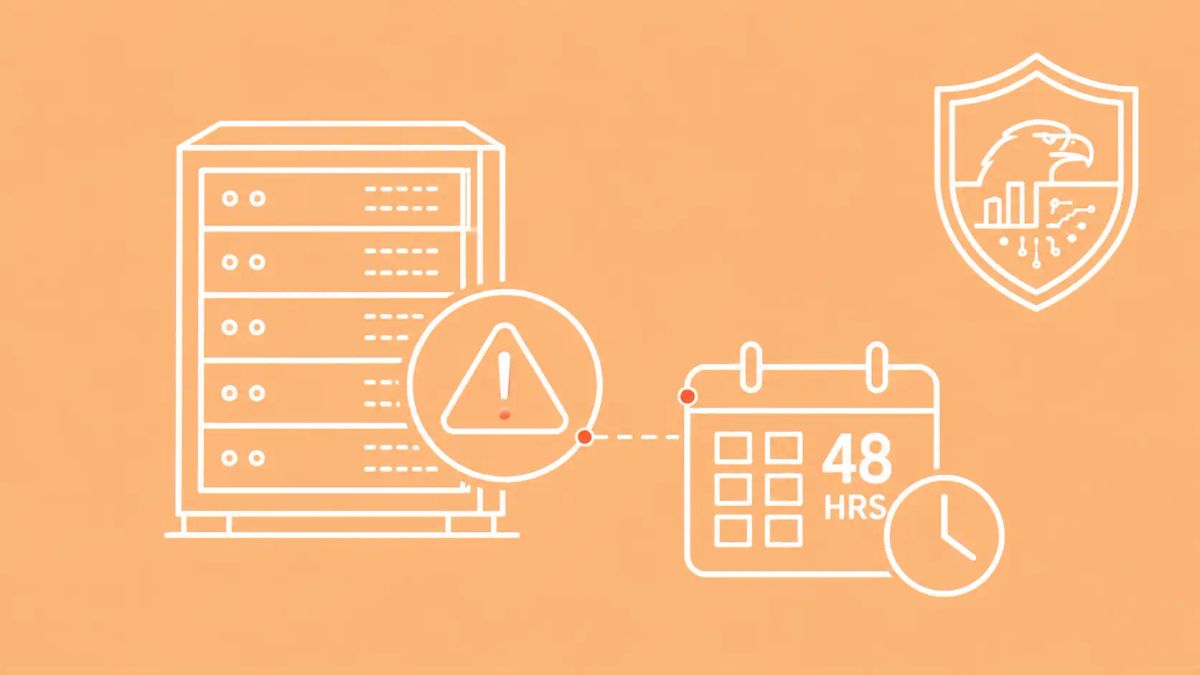
CISA has ordered all federal agencies to patch CVE-2026-41940 in cPanel and WHM by May 3 — a critical authentication bypass already exploited in the wild that grants full host takeover, issued just days after emergency patches were released.
WASHINGTON, D.C. — The Cybersecurity and Infrastructure Security Agency added CVE-2026-41940 to its Known Exploited Vulnerabilities catalog on May 1, issuing a binding operational directive requiring all federal civilian executive branch agencies to patch by Sunday, May 3. The vulnerability affects cPanel and WHM — the Linux-based web hosting control panel suite used to manage millions of domains across web hosting providers, government agencies, and enterprise server environments. Rapid7 confirmed that successful exploitation grants an attacker full control over the cPanel host. The patch window of just two days reflects both the critical severity and the confirmed active exploitation already documented in the wild.
Vulnerability profile
Why cPanel is a high-value target
cPanel and WHM are the dominant web hosting management platforms in the shared hosting ecosystem — installed on a vast proportion of Linux-based web servers globally. A compromised cPanel host gives an attacker control not just over one website but over every domain, email account, database, and file on that server. In shared hosting environments where a single server hosts hundreds or thousands of customer sites, a single cPanel compromise provides lateral access to every customer on that host. This is precisely why authentication bypass vulnerabilities in cPanel are among the most urgently patched in the industry. The 48-hour CISA mandate reflects the bureau's assessment that active exploitation combined with the breadth of cPanel deployment creates an unacceptable risk window for any longer patch timeline. We covered the prior cPanel emergency patch — read our full analysis here. All CISA vulnerability mandates are covered under our vulnerabilities coverage on The CyberSignal.
The CISA KEV mandate explained
CISA's Known Exploited Vulnerabilities catalog is the most operationally significant vulnerability prioritization tool in the US federal government. When CISA adds a vulnerability to the KEV catalog, it simultaneously issues a binding operational directive requiring all federal civilian executive branch agencies to remediate within a defined window. For CVE-2026-41940, that window is 48 hours — one of the shortest mandated timelines CISA issues, reserved for vulnerabilities with confirmed exploitation and critical impact. Private sector organizations are not legally bound by KEV mandates, but CISA explicitly recommends all organizations treat KEV additions as urgent remediation priorities regardless of sector.
What to do now
Any organization running cPanel and WHM should treat this as an emergency patch regardless of whether they are a federal agency. Apply the vendor-released patches immediately — do not wait for a scheduled maintenance window. If immediate patching is not possible, restrict external access to the cPanel and WHM management interfaces as an interim measure. Review server logs for any anomalous authentication activity going back to the date of the original emergency patch release. If you detect signs of compromise, assume all hosted domains and associated data are potentially exposed and begin incident response procedures. Report confirmed exploitation to CISA at cisa.gov/report.
The CyberSignal Analysis
Signal 01 — A 48-hour federal mandate means this is already being exploited at scale
CISA does not issue 48-hour binding mandates for theoretical risks. By the time CVE-2026-41940 appeared in the KEV catalog with a two-day patch deadline, CISA's threat intelligence had already established that exploitation was not just confirmed but active and widespread enough to justify the most urgent remediation timeline the agency issues. Private sector organizations that wait for their quarterly patch cycle will find that 48-hour federal windows indicate they are already behind.
Signal 02 — Shared hosting environments multiply the blast radius of every cPanel breach
The standard framing of web server vulnerabilities focuses on the compromised host. With cPanel, that framing understates the actual impact. A single compromised cPanel instance in a shared hosting environment means every customer on that server — every website, every email account, every database — is potentially accessible to the attacker. Web hosting providers running cPanel at scale need to treat this as a platform-level emergency, not a per-server issue.
Signal 03 — The gap between emergency patch and KEV addition reveals a detection lag
cPanel released an emergency patch before CISA issued the KEV mandate — meaning the vulnerability was known and patched before federal agencies were ordered to act. The interval between emergency patch availability and KEV catalog addition reflects the time it takes for exploitation evidence to accumulate to the threshold CISA requires. Organizations that patch on KEV mandate timelines rather than on emergency patch availability are always behind the exploitation curve by definition. The CyberSignal separately tracked a 7-Zip heap-overflow flaw on the same patch-now footing.