$5 Postcard Tracker Compromises $585M Dutch Warship for 24 Hours

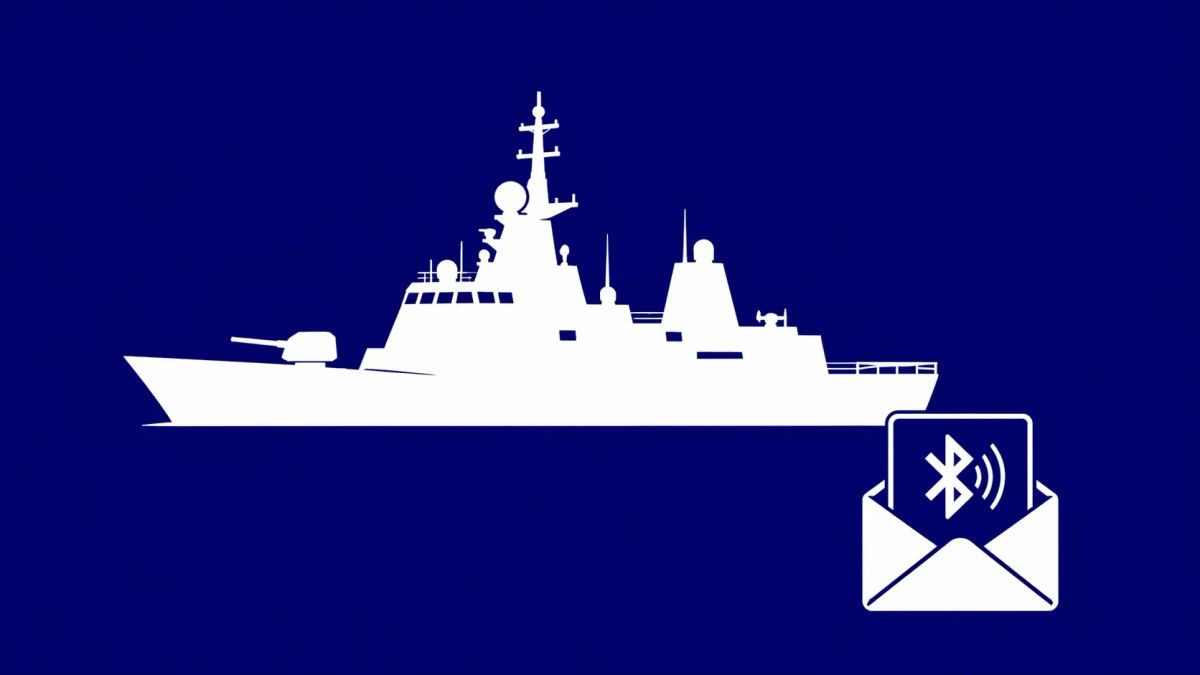
Journalist demonstrates naval mail screening flaw by mailing a Bluetooth device to NATO frigate HNLMS Evertsen; envelopes were not X-rayed like standard packages.
THE HAGUE, NL — In a staggering demonstration of security asymmetry, a Dutch journalist has exposed a critical physical vulnerability within NATO naval operations. By mailing a $5 Bluetooth tracker concealed inside a simple postcard envelope, Just Vervaart of regional broadcaster Omroep Gelderland successfully tracked the location of the HNLMS Evertsen — a $585 million air-defense frigate — for approximately 24 hours.
The frigate, currently part of a NATO carrier strike group led by the French aircraft carrier Charles de Gaulle, had recently departed Heraklion, Crete. The tracker successfully broadcasted the ship's westward movement along the Cretan coast and its subsequent turn toward Cyprus before being detected during a routine mail sorting process on March 27, 2026.
Breach Audit: The Military Postal Gap
The experiment leveraged the Dutch Ministry of Defense's publicly available mailing instructions. While military postal services strictly X-ray packages, standard envelopes and greeting cards were historically exempt from the same level of scrutiny — a gap the journalist exploited with a consumer-grade tracker.
Technical Exploitation and Policy Response
The tracker did not require its own GPS antenna; instead, it utilized the crowdsourced "find my" networks of the crew's own smartphones to relay location data back to the journalist. This low-tech physical security bypass highlights how sophisticated naval defenses can be undermined by common household items.
In response to the demonstration, the Dutch Ministry of Defense has banned all battery-powered greeting cards from military mail and tightened screening protocols for envelopes. This follows a previous "Strava leak" incident involving a French officer in the same carrier group, suggesting a systemic struggle to manage physical security best practices in a hyper-connected world.
The CyberSignal Analysis
Signal 01 — Cost Asymmetry in Modern Warfare
The fact that a $5 consumer item can compromise the positioning of a $585 million warship is a textbook example of cost-effective asymmetric "probing." While this was a journalist's test, the implications for nation-state actors are clear: physical mail remains a high-value, under-audited entry point for intelligence gathering.
Signal 02 — The Human Network as a Proxy
The tracker's reliance on crew smartphones underscores the danger of personal devices in sensitive environments. By simply being in proximity to the tracker, the sailors unknowingly acted as the data exfiltration pathway, turning the ship's own internal connectivity against its operational security (OPSEC).